Auschwitz from Zakopane Is Too Long a Day, and It Deserves Better Than That
I keep seeing the same itinerary suggested online: base yourself in Zakopane for a week of mountains, and slot in “a day trip to Auschwitz” somewhere in the middle, the way you’d slot in the Dunajec gorge or an afternoon at the thermal baths. I understand the appeal. It looks efficient on paper — one more line on the list, checked off, everyone home by dinner. Having actually looked hard at what that day involves, I don’t think it holds up, and I don’t think it should.
The math nobody puts on the tour page
Start with the road. Auschwitz-Birkenau sits near Oświęcim, and from Zakopane that’s roughly 130 to 140 km — not far on a map, but the only realistic route runs you back down the Zakopianka toward Kraków before turning off, which means 2.5 to 3 hours each way on a road that has no patience for being rushed. Two ends of that drive alone account for five to six hours before you’ve set foot anywhere.
Then there’s the visit itself. A proper guided tour of Auschwitz I runs about 3.5 hours, and that’s before you account for the walk to Birkenau and the time that site deserves on its own — the scale of it, the selection ramp, the barracks stretching further than a quick look can take in. Round it generously and you’re at four hours minimum for the memorial itself, more if you don’t want to feel herded through it.
Add it up: 5 to 6 hours of driving, 4 or more hours inside, plus the inevitable stop for fuel or a bathroom break, and you’re looking at a 10 to 12 hour day that starts before dawn and gets you back to your hotel well after dark. That’s not a day trip. That’s an expedition with a memorial bolted onto the middle of it, and the memorial is the part that suffers.
A place that asks you to slow down, not speed up
Here’s the part that matters more than logistics. Auschwitz-Birkenau isn’t a stop you tick off between two mountain hikes. It’s not comparable to the thermal baths or an afternoon in Kraków’s old town, places built for a couple of enjoyable hours and a coffee after. It asks something different of a visitor — time to actually walk through it, read the placards, stand in a room and let it be what it is, rather than checking a watch because the driver wants to beat evening traffic on the way back.
I’ve read enough accounts from people who did the marathon version — up before sunrise, three hours on a coach, the visit itself compressed into a fixed guided slot because that’s what the timed ticket allows, then straight back onto the bus for the return leg — and the common thread is regret, not about having gone, but about how it felt rushed on both ends. That’s not a failure of the site. It’s a mismatch between what the place is and how the day was built around it.
There’s also a practical trap that catches people who plan this from Zakopane specifically: entry to Auschwitz-Birkenau is free, but it requires an online reservation for a timed slot, and in the busier months those slots for the popular morning windows can sell out days in advance. A day built around a 3-hour drive each way leaves almost no flexibility if the booking situation doesn’t line up with when you need to leave to make the return trip work.
Why Kraków is the honest answer
The reason this whole equation flips is simple: Auschwitz-Birkenau is about 15 km from Kraków, a 20 to 30 minute drive. Kraków is already the gateway to Zakopane, roughly 110 km and 2 to 2.5 hours away by bus — which means almost everyone doing a Tatras trip already passes through it, whether flying into KRK airport or catching a train or bus at the start or end of their stay.
That overlap is the natural solution. Instead of bolting Auschwitz onto a week based in Zakopane, give it its own morning from Kraków — on the day you arrive before heading up to the mountains, or the day you head back before your flight. The drive drops from three hours to thirty minutes. The visit gets the unhurried time it deserves. And your mountain days stay mountain days, free of a 4 a.m. wake-up call for something that has nothing to do with hiking or cable cars.
If you’re spending any real time around Zakopane, the Tatras themselves already fill the days well — Morskie Oko and its notoriously popular booking window, the cable car up to Kasprowy, an evening at the baths. None of that competes for headspace with a memorial the way a same-day pairing does. People who’ve tried both versions — the marathon from Zakopane and the short, deliberate visit from Kraków — consistently describe the second as the one that actually let the place register.
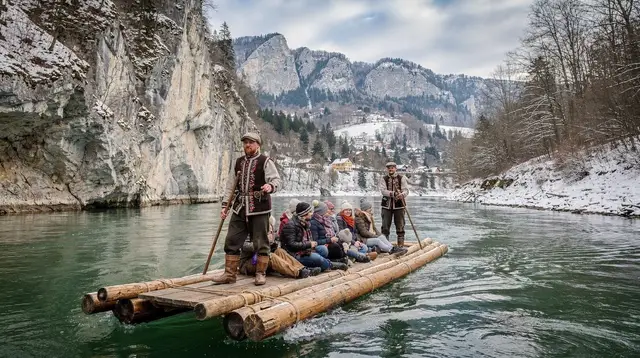
I’m not arguing against going. I think most people who make the trip come away glad they did, whatever form it takes. What I’d push back on is the framing that turns it into just another line item on a Tatras itinerary, interchangeable with a rafting trip or a spa afternoon. It isn’t, and treating it that way does a disservice to the ten or twelve hours you’ll spend getting there and back, and to the couple of hours inside that are the actual point of going.
If your trip genuinely has room for a longer stop in Kraków — a night before or after the mountains, rather than a straight pass-through — that’s when this piece of the trip finds its natural place. Give it that separate day, and give the mountains the days they’re owed in return.
Planning your Zakopane and Kraków days
a full-day trip from Kraków into the Zakopane and Tatra Mountains area is a reasonable way to see the mountains without committing to a full base-switch, and if you’d rather combine the highlights with the region’s signature lake, a Kraków day trip covering Morskie Oko and Zakopane together packs a full mountain day into the same kind of window Auschwitz-Birkenau needs on its own.
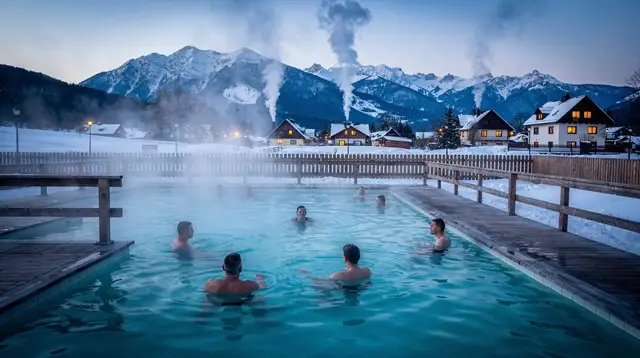
For a gentler pace that mixes the town with relaxation, a day trip pairing Zakopane with the thermal baths is the closer match to a genuinely light day out — which is exactly the category Auschwitz-Birkenau doesn’t belong in.
Auschwitz-Birkenau from Zakopane: frequently asked questions
How far is Auschwitz-Birkenau from Zakopane?
About 130-140 km by road, roughly 2.5 to 3 hours each way depending on traffic on the Zakopianka. It is much closer to Kraków, about 15 km, or 20-30 minutes.
Do I need to book Auschwitz-Birkenau tickets in advance?
Yes. Entry is free but a timed online reservation is required, especially from spring to autumn when slots for popular morning hours sell out days ahead. Turning up without one from Zakopane after a long drive is a real risk.
How long does a proper visit to Auschwitz-Birkenau take?
A guided visit to Auschwitz I typically runs about 3.5 hours and includes the walk to Birkenau, or longer if you add Birkenau’s full grounds separately. Rushing it defeats the point of going.
Is there a better way to visit Auschwitz-Birkenau if I am staying in Zakopane?
Yes: treat it as a separate excursion from Kraków, either on your way in or out of the mountains, or as a dedicated day if you base yourself in Kraków for a night. That keeps the drive under an hour each way.
What do Zakopane-based day tours to Auschwitz actually look like?
Most combine a very early departure, around 3.5 hours in the memorial, and the return drive, landing back in Zakopane after dark. It is doable, but it leaves little room for delays, traffic, or simply needing more time inside.
Is Auschwitz-Birkenau appropriate to combine with a fun day out?
Most people who have been there would say no. It sits oddly next to a morning at a water park or an afternoon on the Krupówki. Giving it its own day, without another agenda attached, tends to make for a more honest visit.
Should I visit Auschwitz-Birkenau at all?
That is a personal decision. If you do, the case in this piece is only about when and from where, not whether — go with enough time, and go deliberately.
tours.Opinion
Verified deep-linked GetYourGuide tours. Book through these links and we earn a small commission at no cost to you.
GetYourGuide does not provide a product photo for this activity — the image shows the meeting point, photographed by us.