A Day Trip to Kraków from Zakopane
Can you visit Kraków in a day from Zakopane?
Yes, but plan it as a long day rather than a relaxed one. The 110 km takes roughly 2 to 2.5 hours by bus, 2 to 3.5 hours by train, and about 1.5 hours by car outside peak times, though the single road linking the two towns can push that further on a bad afternoon. A round trip by public transport typically leaves 5 to 7 hours in Kraków itself once transfers and a safety buffer are counted.
Doing It the Other Way Around
Most of the traffic on this route runs in the opposite direction: visitors based in Kraków booking a day trip up to Zakopane and the Tatras. Fewer people ask the reverse question, but it comes up constantly among travellers who have based themselves in Zakopane for a week and wonder, halfway through, whether a day in Kraków fits into the schedule. The honest answer is yes, but the trip needs to be planned around the road that connects the two towns, not around a wish list of everything Kraków has to offer. This guide works through the numbers, compares the ways of getting there, and lays out what a realistic day actually looks like once the travel time is subtracted from it.
The Numbers Everyone Quotes
The distance is about 110 km by road, and every source repeats roughly the same range of travel times: 2 to 2.5 hours by bus, 2 to 3.5 hours by train depending on the service, and about 1.5 hours by car outside peak times. Those figures are accurate, and they are also incomplete on their own, because they describe a best case. What they leave out is that Zakopane and Kraków are connected by a single main road, the Zakopianka, and that road is the one variable that decides whether a day trip feels comfortable or feels like most of the day was spent in transit.
The practical way to use these numbers is as a floor, not a promise. Budget the low end of the range for a good day, and build in a buffer for a bad one, especially if the trip falls on a Friday, a Sunday, a public holiday or a snowy weekend. For the full breakdown of each option, including where buses and trains depart from and how to check timetables, the dedicated guide to getting between Kraków and Zakopane covers the practical detail this page does not repeat.
Bus, Train or Car: Which One to Pick
For a day trip with a fixed return time, predictability matters more than the theoretical fastest option. Here is how the three compare, using the figures above:
| Option | Typical time | What decides the actual time |
|---|---|---|
| Bus | 2 to 2.5 hours | Route taken and road traffic; over 50 departures a day |
| Train | 2 to 3.5 hours | Which service is booked; routing varies more than the bus |
| Car | About 1.5 hours outside peak times | The state of the Zakopianka on that specific day |
The car looks fastest on paper, and outside busy periods it is. The catch is that “outside peak times” is doing a lot of work in that sentence. A car trip timed for 1.5 hours can stretch well past that on the wrong afternoon, and unlike a bus or train, there is no fixed schedule to fall back on if the road is jammed. For a traveller who needs to be back in Zakopane by a specific hour, that unpredictability is the whole risk of the day.
Bus and train both trade a slightly longer scheduled time for a fixed departure and, in the case of the bus, frequent enough services that missing one is not a disaster. Between the two, the bus generally has the edge on frequency, with more than fifty daily departures spread across the day, while the train’s advantage is a more comfortable ride and, on the faster services, a competitive time. Neither removes the Zakopianka from the picture entirely, since buses use the same road as cars, but a scheduled service absorbs some of that uncertainty instead of passing all of it on to the traveller.
Why the Zakopianka Changes Everything
The Zakopianka is the road that carries almost all traffic between Kraków and Zakopane, and it is the single reason none of the travel-time figures above should be treated as guaranteed. It jams predictably at a handful of times: Friday evenings, as weekend visitors head south; Sunday afternoons, as the same visitors head back; public holidays; and snowy weekends in winter, when conditions slow everything down regardless of the traffic volume. On any of those days, a 1.5-hour car journey can double, and even bus journeys run longer than scheduled.
This is not a reason to avoid the trip, but it is a reason to choose the day and the departure time deliberately. A weekday, ideally outside the school-holiday weeks, gives the most reliable journey in both directions. Anyone whose Zakopane stay only allows a weekend for this trip should expect to add real buffer time on top of the numbers quoted above, particularly for the return leg on a Sunday afternoon.
The situation is covered in more detail, including what drivers specifically should expect at different times of year, in the guide to driving to Zakopane and the Zakopianka and in the short piece on why the Zakopianka is the real variable in any journey between the two towns.
What the Day Actually Looks Like
A realistic day trip, taking the bus or train in both directions, breaks down roughly like this for someone departing from central Zakopane:
| Time block | What is happening |
|---|---|
| Early morning | Walk or minibus to the departure point in Zakopane |
| 2 to 3.5 hours | Bus or train to Kraków |
| 5 to 7 hours | Time in Kraków |
| 2 to 3.5 hours | Return bus or train to Zakopane |
| Evening | Back in Zakopane, likely later than planned if the road was busy |
That middle row is the number that matters most, and it is the one day-trip planning usually gets wrong by ignoring it. An early departure, a modest buffer at each end for delays and for walking to and from stations, and a return service booked with some slack rather than the last one of the day, together tend to leave somewhere between 5 and 7 hours actually spent in Kraków.
That is a workable day for the historic centre, but it rules out trying to add Wieliczka salt mine or the Auschwitz-Birkenau memorial to the same itinerary — both are worth a half-day or more on their own, and stacking either onto this trip turns a long day into an exhausting one. If either site is a priority, it deserves its own separate day, ideally based from Kraków rather than squeezed onto a return trip from Zakopane.
Is a Day Trip the Right Plan
For a visitor who has come to the Tatras for hiking, thermal baths and mountain air, and who simply wants a taste of Kraków’s Old Town, market square and Wawel Castle, a day trip covers the essentials well. It is a different city entirely from Zakopane, and even five or six hours is enough to understand why it draws people on its own merits.
For a visitor who wants Kraków properly — its museums, its Jewish quarter Kazimierz, a evening without watching the clock, or a day trip of its own to Wieliczka or Auschwitz-Birkenau — a single night in the city removes the pressure entirely. It also removes the return-journey risk: rather than needing to be back on a specific bus or train, the return to Zakopane can happen the next morning, outside the worst traffic windows.
Anyone weighing the two options, including the reverse question of whether Zakopane is worth the trip from a Kraków base, may find it useful to compare notes with the guide on whether a Zakopane day trip from Kraków is worth it, which covers the same road from the other direction, and with the broader planning guide on how many days a first Zakopane trip needs to see where a Kraków night might fit into a longer itinerary.
For anyone whose time in the region is centred on the mountains rather than on cities, it is also worth remembering that Kraków is not the only day-trip option. Closer alternatives inside the Podhale and Pieniny, or a look at what other single-day options exist near Kraków itself, are covered in the guide to Wadowice, Ojców and other day trips and the piece on the Nowy Targ Thursday market, both of which take far less time out of a Zakopane-based stay.
Booking Without a Car
For a visitor without a rental car, the bus or train removes the single biggest source of uncertainty in this trip: the state of the Zakopianka on the day. Both run to a timetable regardless of traffic, and while a bus or train can still run late, it does so within a range that can be planned around, unlike a car journey with no fallback if the road backs up.
Travellers who would rather not manage tickets, timing and station transfers themselves sometimes look at the guided trips that already run this corridor, most of which are organised from Kraków for visitors doing the reverse journey up to the mountains. A private tour that can be tailored to a specific schedule is one option for anyone who wants a driver rather than a public timetable, in either direction.
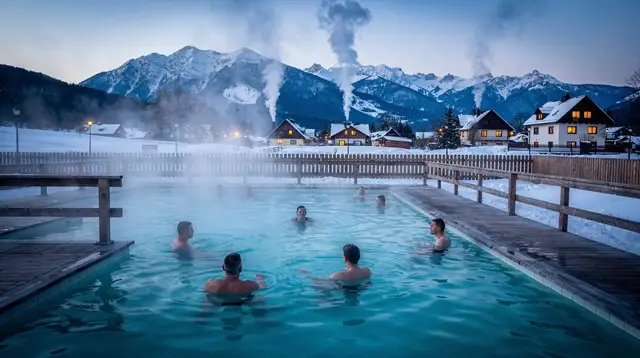
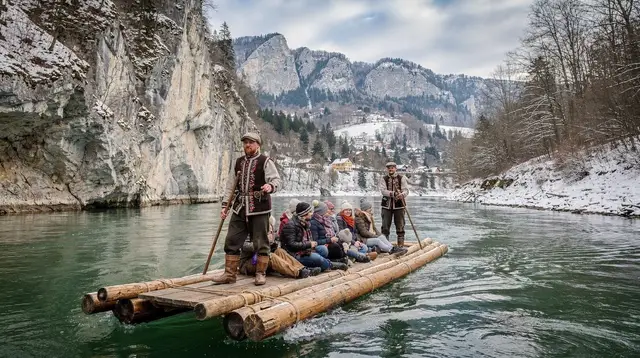
Others combine the road trip with a stop at the thermal pools, such as the day trip pairing Zakopane with a thermal spa, which is worth knowing about even for a Zakopane-based traveller, since it shows how much time Kraków-based visitors budget for essentially the same road in reverse. For anyone extending the trip toward the Pieniny rather than into Kraków itself, the rafting day trip on the Dunajec Gorge follows a different, shorter stretch of road and is a useful comparison for how travel time changes once the destination shifts east.
None of these replace the point of this page: whichever way the trip is arranged, the road between Kraków and Zakopane is the variable to plan around, and a bus or train removes more of that uncertainty than a car does. For travellers arriving by air rather than starting from Zakopane, the separate guide to transferring from Kraków airport to Zakopane covers that specific leg, and the minibuses that connect Zakopane to the valley trailheads are worth knowing about for getting to the bus or train station itself on the morning of departure.
Getting It Right on the Day
A few habits make the difference between a day trip that works and one that eats into the next day’s plans. Book the outbound service for the earliest reasonable departure, since every extra hour in Kraków comes from the start of the day, not the end of it. Choose a return service with some slack before the last one, so a delay on the Zakopianka does not turn into a missed connection.
Avoid Friday evenings and Sunday afternoons if the schedule allows any flexibility at all, since those are consistently the two windows when the road is at its worst. And treat the 5-to-7-hour window in Kraków as the real budget for the day: the historic centre and Wawel Castle fill it comfortably, but Wieliczka and Auschwitz-Birkenau each need a day of their own, not a slot squeezed into a return trip.
Set against that budget, a day trip to Kraków from Zakopane is a good use of a spare day for a visitor who wants a real look at the city without giving up a night in the mountains. It works best when the transport choice removes uncertainty rather than adding to it, which in practice means favouring the bus or train over a self-driven car whenever the return time matters. For readers weighing whether their overall stay has room for this trip at all, the guide to what to budget in złoty for the whole visit and the overview of Zakopane itself and of Kraków as a destination are useful starting points before locking in a departure date.
Kraków Day Trip from Zakopane: Frequently Asked Questions
Is it realistic to see Kraków in one day from Zakopane?
It is realistic if the day is planned around the transport rather than around a wish list. With a bus or train leaving early and a return in the evening, a visitor typically has enough time for the Old Town, Wawel and one more stop, but not for a leisurely pace or for Wieliczka and Auschwitz-Birkenau on the same day.
What is the fastest way to get from Zakopane to Kraków?
A car outside peak times is usually the quickest, at around 1.5 hours, but that estimate assumes clear traffic on the single road between the two towns. Bus and train are slower on paper, roughly 2 to 3.5 hours depending on the service, but their timing is far more predictable than driving.
How long does the bus from Zakopane to Kraków actually take?
Scheduled time is usually 2 to 2.5 hours, with more than fifty departures a day spread across several operators, so there is rarely a long wait for the next one. Journey time depends on the route taken and on how busy the road is that day.
Is there a direct train from Zakopane to Kraków?
Yes, though services vary in routing and stops, so journey time ranges from about 2 to 3.5 hours. It is worth comparing a couple of departure times rather than booking the first one shown, since the difference between services can be an hour or more.
Should I drive from Zakopane to Kraków for a day trip?
Driving works well outside busy periods, but the road is a known bottleneck on Friday evenings, Sunday afternoons, public holidays and snowy weekends, when the drive can take twice as long as expected. For a day trip with a fixed return time, a bus or train removes that uncertainty.
How many hours will I really have in Kraków?
After subtracting transfer time on both legs plus a buffer for delays, a day trip by public transport usually leaves somewhere between 5 and 7 hours in the city itself. That is enough for the historic centre and one further sight, not for a full itinerary.
Would an overnight stay in Kraków work better than a day trip?
For anyone who wants to add Wieliczka salt mine or the Auschwitz-Birkenau memorial to the visit, or who simply wants an unhurried day, one night in Kraków removes the pressure of a fixed return journey and is generally the better plan.
Which days should be avoided for this day trip?
Friday evenings, Sunday afternoons, Polish public holidays and snowy winter weekends are when the connecting road is busiest, which affects bus and car journeys alike. A weekday departure gives the most predictable trip in both directions.
Trips to Kraków
Verified deep-linked GetYourGuide tours. Book through these links and we earn a small commission at no cost to you.
GetYourGuide does not provide a product photo for this activity — the image shows the meeting point, photographed by us.