Explore Zakopane by area
Six areas worth building a Zakopane trip around, from the town itself and Krupówki, to Tatra National Park with Morskie Oko and Kasprowy Wierch, the Podhale villages, the Pieniny around Szczawnica, the Slovak Tatras across the border, and Kraków as the gateway.
Must-visit areas
The areas every first-time visitor should build a trip around — Zakopane town itself, Tatra National Park nearby with Morskie Oko and Kasprowy Wierch, and the Podhale villages with their thermal baths as the region's other easy day trips.

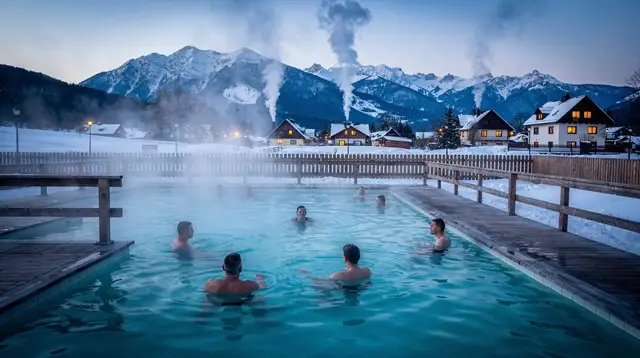
Chochołów Village and Its Thermal Baths
Chochołów's wooden village and Poland's largest thermal baths, and why neither one is the Chochołowska hiking valley 10 km away.

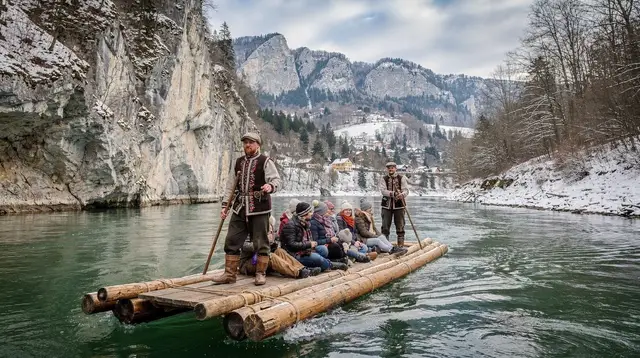
The Dunajec Gorge Raft Trip: How the Wooden Raft Descent Actually Works
How the traditional wooden raft descent through the Dunajec gorge works: route, season, timing, and what to book before and after.

Kraków: The Gateway to Zakopane
How to get from Kraków to Zakopane by bus, train or car, KRK airport transfers, and why Wieliczka and Auschwitz belong to Kraków, not the Tatras.

Kuźnice and Kasprowy Wierch: Getting There and the Cable Car
How to reach Kuźnice, ride the Kasprowy Wierch cable car, and what a summit day in the Tatras actually takes to plan and book.

Morskie Oko
Morskie Oko sits 9 km beyond a car park that must be booked online. Here's exactly how to get there, on foot or by carriage, and how long it takes.

Zakopane
Zakopane sits at 830-1,000 m and holds about 27,000 people: one street, wooden villas, a ski jump, and the gateway to the Tatra Mountains.
36 guides →More to explore
Areas for a second trip or a longer first one — the Pieniny with the Dunajec gorge and Niedzica castle, the Slovak Tatras across the open border, and the villages and market town of Nowy Targ further into Podhale.

Białka Tatrzańska: Skiing and Thermal Baths Guide
Kotelnica offers 20km of family skiing near Białka Tatrzańska; Terma Bania taps water from 2,500m. Neither matches Kasprowy's high-mountain skiing.

Bukowina Tatrzańska
Bukowina Tatrzańska in the Polish Podhale: the Terma Bukovina thermal baths, the small Rusiń-Ski slopes, and minibus access from Zakopane, no car needed.

Chochołowska Valley: Crocus Season and Poland's Longest Tatra Valley
When do crocuses bloom in Chochołowska Valley? Poland's longest Tatra valley, near but distinct from Chochołów village, with a park ticket required.

Kościeliska Valley: The Family-Friendly Walk in the Tatras
Kościeliska Valley from Kiry is a flat, paved 9 km walk with caves and a mountain hut — the easiest family day in the Tatra National Park.

The Valley of Five Polish Lakes and Rysy
The Five Lakes valley is a full, chain-free day. Rysy is a separate, harder climb with chains and snow into July. Here is how they actually compare.

Giewont: The Sleeping Knight of the Tatras
Giewont's chains and 1901 iron cross look dramatic, but exposure and lightning risk rule out beginners. What the climb from Kuźnice actually takes.

Gubałówka: How to Ride the Funicular and What's at the Top
Gubałówka funicular guide: 3-4 minutes from Krupówki to a 1,126 m viewpoint over the Tatras, with souvenir stalls, a summer toboggan and easy walks.
36 guides →
Niedzica Castle and Lake Czorsztyn
Niedzica's 14th-century border castle faces Czorsztyn's ruins across a reservoir lake, with Trzy Korony's cliff-top view nearby in the Pieniny.

Poronin and Murzasichle
Poronin and Murzasichle sit north of Zakopane, reachable by minibus, with the Podhale's treetop walk as their one verified attraction.

Štrbské Pleso: The Slovak Tatra Lake Near Zakopane
Štrbské Pleso is a 1,346m Slovak Tatra lake, a day trip from Zakopane across an open border, paid in euros, not złoty.

Szczawnica: What to Do at the End of the Dunajec Raft Trip
Szczawnica is the Dunajec raft's finish line, not a round trip. What the rafting really involves, the Homole gorge walk, and how to get back.

Tatranská Lomnica and the Lomnický Štít Cable Car
Tatranská Lomnica's cable car reaches Lomnický štít at 2,634 m — higher than Kasprowy Wierch, but a longer, weather-dependent day from Zakopane.

Ždiar and the Bachledka Treetop Walk: Is It Family-Friendly?
Bachledka treetop walk in Ždiar, Slovakia: length, height, stroller access, the pets ban, and how it differs from Zakopane's own treetop trail.
Off the beaten path

Kościelisko: The Podhale Village Between Two Tatra Valleys
Kościelisko is a Podhale village near Zakopane that mainly serves as the access point to the Kościeliska and Chochołowska valleys, not a day out itself.

Nowy Targ: Podhale's Market Town
Nowy Targ is Podhale's market town, not a mountain destination: visit only for the Thursday and Saturday morning market, a right granted in 1487.

Orava Castle and the Liptov Region
Orava Castle and the Liptov region sit 30-60 km from Zakopane over an open border: what a full day trip there really involves.

Poprad and Kežmarok
Poprad and Kežmarok are Slovak Tatras gateway towns for transit and add-on stops, not a stand-alone day trip from Zakopane.

Szaflary
Szaflary, 17 km from Zakopane, offers one real stop: the Gorący Potok and Termy Szaflary thermal baths, best in the evening.
Good to know about destinations across the Polish Tatras
Zakopane anchors this hub, and everything else on the site fans out from it across six areas of the Polish Tatras — Zakopane itself sits at 830 to about 1,000 m, in the Lesser Poland voivodeship, home to roughly 27,000 people and known as the winter capital of Poland. Zakopane town covers the town itself: the pedestrian street Krupówki, the funicular up to Gubałówka, the cable-car base at Kuźnice, the Wielka Krokiew ski jump, the wooden villas of the Zakopane style, the old church and the Pęksowy Brzyzek cemetery, the Tatra Museum, and the Atma and Koliba villas.
Tatra National Park groups Morskie Oko, the cable car to Kasprowy Wierch, Giewont with its chains near the top, Rysy, Poland's highest point, the Valley of Five Polish Lakes and Siklawa, the paved Kościeliska valley, the long Chochołowska valley and its April crocuses, Rusinowa Polana, and Nosal. The Podhale villages cover Kościelisko, the wooden village of Chochołów and its Termy Chochołowskie, Poronin and Murzasichle, Szaflary, Nowy Targ and its Thursday market, and Białka Tatrzańska and Bukowina Tatrzańska with their thermal baths. The Pieniny groups Szczawnica, Niedzica castle and Czorsztyn lake, the Dunajec gorge rafted on wooden rafts from Sromowce to Szczawnica, and Trzy Korony.
The Slovak Tatras, 30-60 km away across an open Schengen border, take in Štrbské Pleso, Tatranská Lomnica and the Lomnický štít cable car, the Bachledka treetop walk at Ždiar, Belianska cave, Poprad, Kežmarok and Orava castle. Kraków closes the loop as the gateway, about 110 km by road, roughly 2 hours by bus, with the KRK airport and the day trips sold from there to Zakopane, the thermal baths and the Dunajec — plus Wieliczka and the Auschwitz-Birkenau memorial. A rental car is optional for most of these areas, since minibuses cover every trailhead — each destination page below sets out what's actually there rather than a generic description of "Poland".
Frequently asked questions about destinations across the Polish Tatras
What are the six regions on this hub?
Zakopane town; Tatra National Park; the Podhale villages; the Pieniny; the Slovak Tatras; and Kraków.
Is Zakopane by the sea?
No — Zakopane is not by the sea: it's a mountain town at 830 to about 1,000 m in southern Poland, reached from Kraków by road or bus, roughly 110 km and about 2 hours each way.
What's the difference between Morskie Oko and Kasprowy Wierch?
Morskie Oko is the largest lake in the Tatras, reached from the Palenica Białczańska car park by a 9 km paved road on foot or by horse carriage to Włosienica; Kasprowy Wierch, at 1,987 m, is reached instead by the PKL cable car from Kuźnice, with dated and timed tickets that sell out on fine days.
Do I need a car to reach Kuźnice?
No — Kuźnice is closed to private cars: minibuses run there all day from the bus station area and Kościuszki street, so a rental car is not required for this trip.
Why might the Kasprowy Wierch cable car be closed when I visit?
The Kasprowy Wierch cable car can close for maintenance in late October-early November and part of spring, and it stops in strong wind, even when the valleys below are clear. Checking conditions before heading up is worthwhile, particularly outside high season.
Day trips from Kraków
Verified deep-linked GetYourGuide tours. Book through these links and we earn a small commission at no cost to you.
GetYourGuide does not provide a product photo for this activity — the image shows the meeting point, photographed by us.