The gateway that decides your whole Kasprowy Wierch day
Every trip to Kasprowy Wierch, the highest point most visitors to the Tatras actually reach, starts at the same place: Kuźnice, the cable car base at 1,000 m on the southern edge of Zakopane. Kuźnice is not a village and not really a destination on its own — it is a car-free staging area with a ticket hall, a handful of stalls, and the lower station of the PKL cable car that climbs to 1,959 m.
How you get here, when you book your ticket, and what the weather is doing at 2,000 m decide more about your day than anything you do once you are on the mountain. This page covers exactly that: getting to Kuźnice, the mechanics of the ride, the ticket system that catches out unprepared visitors, and what a realistic day actually looks like once you reach the top.
Getting to Kuźnice without a car
Kuźnice is closed to private vehicles, and that is not a minor inconvenience — it shapes the whole approach. From the centre of Zakopane, the walk to Kuźnice along the signed route takes 30 to 40 minutes, mostly gently uphill, and is pleasant enough as a warm-up if you are already dressed for the mountain.
Most visitors instead take one of the private minibuses that run constantly from the bus station area and Kościuszki street; they are inexpensive, frequent, and cover the same route in under ten minutes, though they get crowded on peak mornings. Drivers who want their own car nearby should head for the Rondo Kuźnickie car park and walk the remaining stretch to the cable car base — there is no parking closer than that, and no drop-off lane that skips the walk.
Anyone renting a car for the wider trip should also read about driving to Zakopane and where to park, since the same restrictions that apply at Kuźnice apply, in different forms, at most other trailheads in the park. For a first visit, a guided option that already bundles transport is often the least stressful choice — a guided day through Zakopane and the Tatra Mountains typically includes the run out to Kuźnice as part of the itinerary, which removes one variable from a day that already has several.
The cable car ride: two stages, one change
The PKL cable car from Kuźnice to Kasprowy Wierch is not a single continuous cabin. It runs in two stages, with a change of cabin at the mid-station, Myślenickie Turnie. Door to door — boarding, the short first leg, the change, the second leg, and disembarking at the top — the whole journey takes about 20 minutes.
The cabins themselves carry very different numbers of people depending on the season: up to 60 passengers in winter and 32 in summer, a difference driven by weight limits tied to snow and ice loading on the cable system rather than by demand. On a clear summer morning the queues at Kuźnice can be long even with a valid ticket, since boarding is organised in timed batches to match the cabin schedule; arriving at the printed time on your ticket, not earlier or later, keeps things moving.
Tickets: dated, timed, and worth booking early
This is the detail that causes the most frustration for visitors who assume they can simply walk up and buy a ticket. Kasprowy Wierch tickets are dated and timed — you choose a specific date and a specific departure slot, not just “a ticket for today” — and they go on sale online up to two hours before departure. On fine days, especially in July and August and during Polish school holiday weeks, the popular morning and late-morning slots sell out well before that two-hour window even opens, sometimes the evening before. There is no way to guarantee a same-day ride on a clear Saturday in August without having booked ahead.
| Season | Return ticket (2026) | Notes |
|---|---|---|
| High season (summer peak, winter peak) | roughly 99-165 PLN | “Express” slots that skip the queue cost more |
| Low season | around 129 PLN | Still worth booking rather than turning up |
Prices and exact slot availability shift through the season, so treat the table as a planning range rather than a quote. The safe habit, confirmed by anyone who has stood in the Kuźnice queue on a cloudless July morning without a booking, is to buy the ticket online the evening before or first thing that morning, and to build the rest of the day around whichever slot is still available rather than the other way round.
The same booking discipline applies across the park — see the general guide to booking Morskie Oko, Kasprowy and TPN park tickets for how the systems relate to each other, and the dedicated Kasprowy Wierch cable car guide for a slot-by-slot walkthrough of the booking site itself.
What’s at the top: the 1,959 m station and the 1,987 m summit
The cable car’s top station sits at 1,959 m, on a shelf just below the true summit. It is easy to assume this is the top of Kasprowy Wierch, but the actual summit — marked by a cross, a weather observatory, and the border ridge with Slovakia — is at 1,987 m, a short and easy walk of a few minutes above the station along a paved path. Almost everyone who arrives by cable car makes this walk; it costs little effort and is where the panorama opens fully, with the High Tatras spread along the southern skyline and the Podhale lowlands falling away to the north.
On a clear day the view reaches past Giewont and toward the ridge lines that separate Poland from Slovakia — worth comparing, before you go, with the very different panorama from Gubałówka, which is lower, gentler, and reached by a different funicular entirely; the Kasprowy Wierch versus Gubałówka comparison lays out which one suits which kind of visitor.
Ridge routes onward: Kopa Kondracka, Giewont, and Hala Gąsienicowa
For visitors who want more than the view and the return ride, Kasprowy Wierch is also a junction for some of the best-known hiking in the range. A marked ridge path runs west from the summit toward Kopa Kondracka, and fit, properly equipped hikers can continue from there down toward Kondratowa hut and on to Giewont — a serious extension of the day, not a stroll, and one that deserves its own planning; read the Giewont hiking guide before committing to it, particularly the section on afternoon thunderstorms.
A gentler option drops northeast from the top station toward Hala Gąsienicowa and the Murowaniec mountain hut, a walk of roughly two hours through classic Tatra meadow and rock scenery that does not require a return cable car ticket for that leg — you simply walk back down to Kuźnice, or all the way to Zakopane, on marked paths. Either extension turns a half-day cable car visit into a full mountain day, and either one requires checking tatra mountain safety and TOPR guidance first, since both routes climb above 1,900 m with no shelter from a fast-moving storm.
When the cable car does not run
The cable car is not a year-round guarantee. It closes for scheduled maintenance in late October to early November, and again for part of spring, both periods chosen because visitor numbers are naturally lower and the infrastructure needs servicing after a hard winter or before one. Outside those planned closures, the cable car also stops in strong wind — the halny, the warm föhn wind that blows through the range at any time of year, is the most common cause, and it can shut the line down with little notice even on an otherwise clear day; the guide to the halny wind explains why it forms and how to read the signs before committing a whole day to a Kasprowy trip.
None of this is predictable months out. The only reliable approach is to check conditions the morning of, hold a loosely flexible plan for the rest of the day, and never assume the ride will run simply because the ticket is bought — refunds and rebooking exist precisely because closures happen.
Kasprowy Wierch in winter versus summer
The mountain runs two almost separate operations depending on the season. In winter, roughly December to April depending on snow, Kasprowy Wierch is the only true high-mountain skiing near Zakopane: a vertical drop of about 973 m and marked off-piste routes that draw skiers who find the gentler local hills, like Nosal or Szymoszkowa, too tame. The larger winter cabins reflect this — 60 people per car, moving skiers and their equipment efficiently on a busy powder day.
The skiing guide to Kasprowy Wierch covers lift tickets, routes and conditions in detail. In summer, the same mountain becomes a hiking and viewing destination, cabins shrink to 32 people, and the crowds shift from skiers to walkers heading for the ridge routes described above or simply for the panorama and a coffee at the top-station café. The two seasons barely overlap in who shows up and why, but the ticket system and the closure risks apply in both.
A realistic day plan
For a visitor based in Zakopane with no other fixed plans, a straightforward Kasprowy Wierch day looks like this: book the cable car ticket online the evening before, choosing an early-morning slot when winds are usually calmer and queues shorter; reach Kuźnice by minibus or on foot with enough margin to be there before the printed departure time; ride up, walk the few minutes to the 1,987 m summit for the view, and either ride straight back down for a half-day outing or continue on foot toward Hala Gąsienicowa for a fuller mountain day.
Visitors combining this with a first trip from Kraków should look at the one-day Zakopane itinerary, which is honest about how much a single day can actually fit, while those with more time can weave Kasprowy into a longer plan using the five-day Tatra hiking itinerary or the general question of how many days Zakopane really needs. Checking seasonal weather patterns before choosing a date is worth the five minutes it takes, since a Kasprowy day built around bad conditions is a day built on sand.
If the cable car is booked out or the wind is up
Because both the booking system and the weather can close the door on a Kasprowy Wierch day with almost no warning, it is worth holding a second plan rather than treating the cable car as non-negotiable. If tickets are gone or the wind is blowing, the Gubałówka funicular is a lower, shorter, and far less weather-sensitive alternative with its own wide panorama of the range, and it rarely sells out the way Kasprowy does.
On a genuinely rough-weather day, activities that do not depend on a mountain lift at all — the treetop rope courses above Gubałówka among them — keep the day productive without gambling on conditions changing.
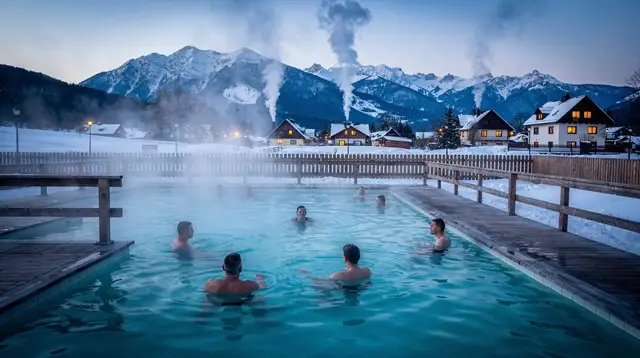
And after a long morning on the mountain, whether the cable car ran or not, a transfer out to the Zakopane-area thermal baths is the standard way locals and visitors alike end the day, soaking tired legs in water that owes nothing to the weather at 2,000 m. Whatever the plan, the rule that matters most is simple: never promise yourself, or anyone travelling with you, that Kasprowy Wierch is guaranteed on a given morning. Book early, check the wind, and keep a fallback in your back pocket.
Kuźnice and Kasprowy Wierch: frequently asked questions
Do I need to book the Kasprowy Wierch cable car in advance?
Yes, in practice. Tickets are dated and timed and go on sale online up to two hours before departure, but on clear days in July and August, and during the Polish school holidays, the popular morning slots sell out well before that window opens. Booking the evening before, or first thing in the morning, is the safer habit.
Can I drive to Kuźnice?
No. Kuźnice is closed to private cars. Walk 30-40 minutes from central Zakopane, take one of the frequent minibuses from the bus station area or Kościuszki street, or drive to the Rondo Kuźnickie car park and walk the last stretch from there.
How long does the cable car itself take?
About 20 minutes door to door, including a change of cabin at the mid-station, Myślenickie Turnie. The ride itself is only a few minutes each way; most of the time goes to loading, the change, and unloading at the 1,959 m top station.
Is the top station the actual summit of Kasprowy Wierch?
Not quite. The cable car’s top station sits at 1,959 m; the true summit, marked by a cross and a meteorological station, is a short, easy walk further up at 1,987 m.
What happens if it is windy or the cable car is closed?
The cable car stops running in strong wind and during scheduled closures in late October-early November and part of spring for maintenance. There is no walking substitute that reaches the top quickly: on a closed or fully booked day, plan a different activity rather than waiting it out at Kuźnice.
Can I ski down from Kasprowy Wierch?
Yes, in winter. Kasprowy Wierch is the only true high-mountain skiing near Zakopane, with a vertical drop of about 973 m and marked off-piste routes for experienced skiers, roughly December to April depending on snow.
What can I do from the top besides ride back down?
Walk the ridge toward Kopa Kondracka, continuing if you are fit and equipped toward Giewont, or descend on foot to Hala Gąsienicowa and the Murowaniec hut, both without needing to buy a return cable car ticket for that leg.