Zakopane Weather Month by Month
What is the best month to visit Zakopane?
There is no single best month, but late September to mid-October is usually the most reliable window, with stable weather, golden larches and thinner crowds. June to September gives every trail its best chance of being open, at the cost of afternoon thunderstorms and peak crowds in July and August.
How the Zakopane calendar actually unfolds
Ask ten locals in Zakopane what the weather will do next week and most will shrug — the Tatras sit close enough to the peaks that conditions change fast, and any specific forecast for a date months away is a guess dressed up as a fact. What is worth knowing instead is the pattern: which months tend to bring snow, which tend to bring mud, which tend to bring crowds, and which tend to give you the best odds of a clear ridge. That pattern repeats often enough, year after year, to plan around — even though no single year matches it exactly.
This page walks through that pattern month by month, the way it has generally played out in recent years. Treat every month below as a tendency, not a promise. Nobody can tell you today whether it will snow in Zakopane on a specific date next January, or whether the crocuses in the Chochołowska valley will be at their peak on the exact day you land. What this page can tell you is what to expect in broad strokes, and what to build your trip around.
December to March: the snowy season, and when it gets crowded
Winter is Zakopane’s identity. From December through March, snow on the ground in town is the norm in most years, the ski areas run, sleigh rides and snowmobile trips fill the valleys, and the town leans fully into its informal title as Poland’s “winter capital.” The Wielka Krokiew ski jump hosts its FIS World Cup weekend in January, and a Christmas market runs on Plac Niepodległości from mid-December into January.
Two windows inside this stretch behave very differently from the rest of winter, and both are worth knowing about before you book:
- Christmas to New Year, and the Polish winter school holidays (roughly mid-January to the end of February), are typically the busiest and most expensive weeks of the entire year. Accommodation fills early, Krupówki gets genuinely crowded, and minibuses to the valleys queue.
- Through this whole winter stretch, some of the high mountain trails are closed for the season — avalanche risk, chamois rut and nesting birds all play a part — so this is not the window for Rysy, the Valley of Five Lakes, or Orla Perć. It is the window for skiing, for the Kasprowy Wierch cable car on a clear day, for sleigh rides, and for warming up afterwards in a thermal bath.
If a winter trip is on the table, our winter season guide and the piece on Polish winter school holidays and crowds go into the trade-offs in more depth, and the 3-day winter itinerary shows how a typical trip in this window is usually structured.
| Winter stretch | What tends to be true |
|---|---|
| December | Snow arriving in most years, quieter than the holidays that follow |
| Christmas–New Year | Busiest and most expensive week of the year |
| Mid-January–end February | Polish school holidays, second crowd peak, high trails closed |
| March | Skiing often still good, slightly calmer than January-February |
April: crocuses in one valley, mud almost everywhere else
April is the month that surprises first-time visitors the most, because it behaves like two different seasons depending on where you stand. In the Chochołowska valley, the longest valley of the Polish Tatras, millions of crocuses (Crocus scepusiensis) typically open from around the first days of the month and carpet the meadows for about two weeks. It is one of the most photographed sights in the whole Tatra calendar, and it is genuinely worth timing a trip around — but the exact bloom window shifts from year to year with how much snow fell and how fast it melts, so nobody can hand you a fixed date in advance.
Step outside that one valley, though, and April tends to mean something far less picturesque: melting snow turning trails to mud, patches of old ice hanging on in shaded and higher sections, and generally unsettled conditions. This is also the month when the Kasprowy Wierch cable car typically has a spring maintenance closure, so it is not a month to build a trip around a cable-car ride to the ridge. Our spring and crocus season guide covers how to plan around both sides of this month.
May and June: snow still sitting above 1,500 metres
By May, the lower valleys have generally shed their winter coat and the town itself looks like spring. Higher up is a different story: snow tends to linger above roughly 1,500 metres well into May and often into early June, which keeps some higher trails closed or genuinely hazardous later into the season than visitors expect. This is the awkward middle stretch — too late for crocuses, often too early for the high routes to be reliably open.
Late June is usually the turning point. In most years, the marked trail network across Tatra National Park opens up fully from around the middle of the month, and this is when the hiking season proper tends to begin. If your trip depends on a specific high route — Morskie Oko and beyond to Czarny Staw, for instance — late June onward is a safer bet than May.
June to September: hiking season, afternoon storms, and the summer peak
This four-month stretch is when the Tatras are at their busiest and most fully open. With trails generally clear from mid-June, this is the window for the classics: the walk up to Morskie Oko, the ridge from Kasprowy Wierch toward Giewont, the long approach through the Valley of Five Lakes, and multi-day routes between mountain huts.
There is a pattern worth building every summer day around: afternoon thunderstorms are frequent in July and August, rolling in from around early-to-mid afternoon on many days. The local habit is to start early, reach the highest or most exposed point of the day well before noon where possible, and be off ridges and summits by early afternoon.
This matters especially on Giewont, where a storm in August 2019 turned fatal — a reminder that this pattern isn’t superstition, it’s how people plan their days here. Our guide to Zakopane’s summer thunderstorm pattern and the blog piece on what changed after 2019 both go into this further.
July and August are also the summer peak in every other sense: Morskie Oko and Krupówki are busy from morning to evening, and both the national park’s entry tickets and the Kasprowy Wierch cable-car slots can sell out — see our guide to booking Morskie Oko, Kasprowy and TPN tickets for how far ahead that tends to matter. If storms or crowds are a concern, cooling off at one of the thermal baths in the late afternoon, after the day’s hiking window has closed, is a common local move.
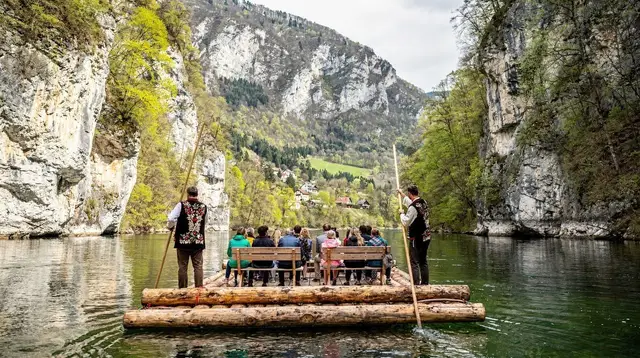
an ATV outing through the Podhale valleys is a way to cover ground on days when the high peaks are better left for calmer weather, and rafting the Dunajec gorge with a private Dunajec rafting trip runs on its own April-to-October season rather than depending on the mountain forecast at all.
September to mid-October: the window most locals would pick
If there is one stretch that tends to reward flexible travel dates, this is it. By September, the afternoon storm pattern of high summer generally eases, the summer crowds thin out noticeably, and the huts are still open. The larches across the valleys turn gold through late September and into October, which is when the autumn season here is at its most photogenic.
This is also, generally, the most weather-stable stretch of the whole calendar — not guaranteed clear skies, but a better statistical bet than the volatility of summer storms or the unpredictability of early winter. The trade-off is length: it is a shorter window than summer, and it closes as the first real cold arrives, which in most years is sometime in October.
One wrinkle to know about at any time of year, including this one: the halny, a warm föhn wind blowing from the south, can strike in any season and typically shuts the Kasprowy Wierch cable car when it does — see the blog piece on the wind that closes the cable car for what that looks like in practice.
November: the dead month
November is the one stretch of the year most visitors plan around rather than toward. The Kasprowy Wierch cable car typically has its autumn maintenance closure here, a number of trails are shut as the park transitions toward winter rules, and plenty of local businesses use the lull to renovate before the ski season ramps up. It is quiet, genuinely, but quiet here tends to mean closed doors rather than empty trails.
Planning around the pattern, not a forecast
None of this replaces checking an actual short-range forecast before you travel, and no month is entirely safe from a bad-weather day arriving unannounced. What the pattern above is useful for is deciding which season fits the trip you actually want: skiing and snow scenery means winter, with the school-holiday crowding that comes with it; wildflowers mean a narrow window in April; a full trail network with predictable afternoon storms means high summer; and the calmest, most reliable stretch tends to be September into mid-October.
However you time it, the town side of a visit works in any season. A private walking tour of Zakopane town or a full sightseeing day trip from Kraków both run year-round, and a soak at one of the Zakopane-area thermal baths is one of the few things on this list that genuinely works whatever the sky is doing. For a first look at how many days to give the region regardless of season, our guide on how many days Zakopane needs is a useful next stop.
Zakopane weather month by month: frequently asked questions
Is there snow in Zakopane in December?
Most winters bring snow to the town and the slopes by December, but it is a trend, not a guarantee for any single trip. Some years the snow arrives earlier or later, so check a short-range forecast before a winter trip rather than assuming a fixed date.
When do the crocuses bloom in the Chochołowska valley?
Typically from around the first days of April for about two weeks, but the exact window shifts with how much snow fell that winter and how fast it melts. Elsewhere in the Tatras, April tends to mean mud and lingering patches of old snow rather than spring colour.
Is it worth hiking in Zakopane in May or June?
Early May can still have snow above about 1,500 metres, which closes some higher trails and makes others icy. By mid-to-late June, most marked trails are typically open, though conditions above the treeline can still vary year to year.
What month has the best weather in Zakopane?
September through mid-October is generally considered the most stable stretch, after the summer’s afternoon storms fade and before the first real winter cold. It also tends to bring fewer visitors than the July-August peak.
Why does the Kasprowy Wierch cable car close in spring?
The cable car typically has a maintenance closure in spring, on top of shutting for strong wind or the halny föhn wind at any time of year. If a cable-car ride is central to your plans, it is worth checking the operator’s schedule before travelling in that window.
Are summer thunderstorms in Zakopane dangerous?
They can be. Afternoon storms are a regular pattern in July and August, and lightning on exposed summits such as Giewont has been fatal before. The usual local approach is to start hikes early and be off ridges and summits well before early afternoon.
Is November a bad time to visit Zakopane?
November is generally the quietest and least rewarding month: the cable car is typically closed for maintenance, some trails are shut, and many businesses use it to renovate before the winter season. Most visitors plan around it rather than through it.
Do the Polish winter school holidays affect prices and crowds?
Yes. The Christmas-New Year period and the Polish winter school holidays, roughly mid-January to the end of February, are typically the busiest and most expensive weeks of the year in Zakopane, on top of some high trails being closed for the season.
Hikes and mountain days
Verified deep-linked GetYourGuide tours. Book through these links and we earn a small commission at no cost to you.
GetYourGuide does not provide a product photo for this activity — the image shows the meeting point, photographed by us.