Zakopane in Winter: 3 Days of Skiing, Snow and Thermal Baths
A Winter Weekend That Skips the High Trails on Purpose
This is the plan for three winter days built around what actually stays open between December and March: the town, one proper ski area, and a soak in hot water at the end. It is not a hiking itinerary. Most of the routes above the valley floors, including Giewont and the trails that make the Tatras famous in summer, close from 1 November to about mid-June for avalanche risk, and no honest guide sends winter visitors up there.
This one keeps you at town level, resort level and thermal-pool level the whole time, and it does not promise snow in Zakopane itself before December or after March — some winters run thin even at Christmas, which is exactly why day two leans on a ski area with snowmaking rather than a hope that the streets will be white.
The plan assumes no rental car. Minibuses reach Białka Tatrzańska and Chochołów from Zakopane year-round, and driving the Zakopianka in winter conditions is one more thing this trip does not need. Three nights in Zakopane is enough; for the fuller shape of a longer winter stay, see the Zakopane winter season guide.
Day 1: Krupówki, the Wooden Town, and the Christmas Market
Arrive in the morning if you can — flying into Kraków and taking a bus or transfer covers the roughly 110 km and 2 to 2.5 hours, and it is worth having the afternoon free. Drop bags and walk into town.
Start with Krupówki itself, the pedestrian spine of Zakopane, about 1.1 km of wooden souvenir stalls, oscypek grills, tea-with-raspberry-syrup stands and horse carriages waiting at the bottom. Note that oscypek is a seasonal cheese made only from May to September under its protected designation; what is grilled on winter stalls is usually cow’s-milk gołka, still worth trying, just not the same thing — the full story is here if you want the detail.
From the top of Krupówki, the Gubałówka funicular climbs 300 m in three to four minutes to a ridge with the whole Tatra chain laid out in front of you and, in winter, a much better chance of real snow underfoot than in the town centre below. Thirty to forty-five minutes along the ridge on foot reaches Butorowy Wierch, with a chairlift back down if you don’t want to retrace your steps.
If your dates fall between roughly mid-December and mid-January, the Christmas market on Plac Niepodległości is worth timing the trip around: stalls, mulled wine, and the town at its most atmospheric. Outside that window, the day still works around the architecture — the wooden villas of the Zakopane style, the old church and the Pęksowy Brzyzek cemetery are a short walk from the main street, and the Wielka Krokiew ski jump is visible from several points in town; if your visit lands around 10–11 January 2026, the FIS World Cup meet turns it into an event, covered here.
End the day with a highlander dinner — kwaśnica, pierogi, grilled trout — and an early night. Day two starts on the slopes.
Day 2: Skiing at Białka Tatrzańska, or a Snowmobile and Sleigh Alternative
This is the day the itinerary is built around, and it splits two ways depending on whether skiing interests you.
Option A — Skiing at Kotelnica. Białka Tatrzańska is about 20 km of pistes on ten lifts, the largest and most family-friendly ski area near Zakopane, and it is the reason this plan doesn’t try to use Kasprowy Wierch for a day of skiing: Kasprowy has real terrain for experienced skiers, but its cable car runs on dated, timed tickets that sell out on fine days and it closes in strong wind — not something to build a fixed itinerary around.
Kotelnica’s snowmaking also means the slopes are skiable even in a thin-snow winter. A day pass runs roughly 150–190 PLN (2026 prices); rental gear and lessons are available on-site for anyone who hasn’t skied before. For a side-by-side of Kotelnica against Zakopane’s smaller in-town slopes, see the ski resorts compared guide, and for beginners specifically, Harenda’s night skiing back in Zakopane is a gentler add-on for a second evening.
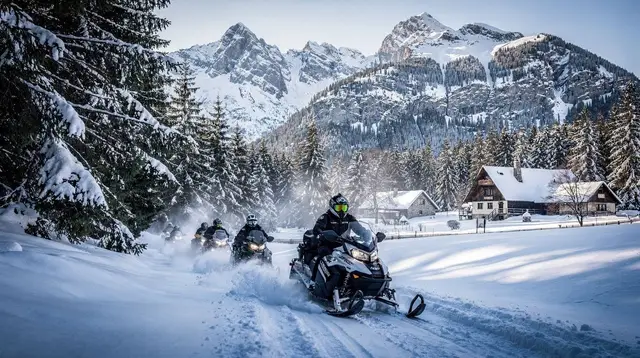
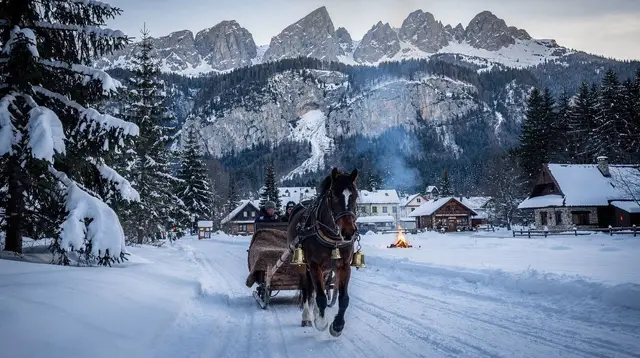
Option B — Snowmobile or sleigh instead. Not everyone skis, and this day swaps out cleanly: guided snowmobile tours run from Zakopane and the surrounding valleys, engines and cold-weather gear included, no experience required beyond following the guide. A traditional horse-drawn sleigh ride, or kulig, is the gentler and more social version — a convoy of sleighs through snowy lanes, often ending at a highlander hut with a bonfire and live music. If you’re weighing the two, this comparison lays out the difference in pace, cost and what each actually feels like.
Whichever you choose, plan for the whole day: transfer time to Białka Tatrzańska or to a snowmobile base eats into the morning, and short winter daylight (dark by mid-afternoon in December and January) means an early start pays off. Base yourself back in Zakopane or in the Białka Tatrzańska area itself — where to stay covers both.
If a full aquapark session appeals more than a straight ski day, Białka Tatrzańska’s own thermal complex is bookable as a standalone visit:
an entry ticket to the Terma Bania aquapark in Białka Tatrzańska, with pools alongside the ski area for an easy swap on a lighter day, or the Terma Bania thermal baths ticket on its own for an afternoon that mixes skiing and soaking without a second trip out.
Day 3: A Slow Morning, Then Termy Chochołowskie
After two active days, day three is deliberately unhurried. Sleep in, have a proper breakfast, and use the late morning for anything left over in town — a return visit to Krupówki, the Tatra Museum, or Villa Atma, the composer Karol Szymanowski’s former home, if wooden-architecture history interests you.
The afternoon heads to Chochołów, about 15 km from Zakopane and reachable by minibus. The village itself, roughly 50 log houses scrubbed pale with soap every spring, is the best-preserved wooden settlement in the Podhale and worth twenty minutes on foot before the main event. Note that the village and its thermal baths are two related but separate stops on the same short trip — don’t confuse Chochołów the village with the Chochołowska valley 10 km away on a different road; that valley is a summer and spring destination (crocus season in April), not part of this winter plan.
Termy Chochołowskie is the largest thermal complex in Poland, around thirty pools at 32–38°C, indoor and outdoor, with saunas and steam rooms alongside. Go for the evening session if your schedule allows it: it’s cheaper and noticeably quieter than the daytime slots, which fill up fast on weekends and during the Christmas and winter school-holiday weeks. For how it compares to the area’s other thermal options, see which thermal baths to choose and the Terma Bania vs Bukovina comparison; the full thermal baths guide covers all of them together.
Two bookable ways to do this stop:
a Zakopane–Chochołów spring pools visit that pairs the baths with a local tasting, a good fit if you want the food side of Podhale culture folded into the same afternoon, or Chochołów thermal baths combined with a tasting and cable-car element for a package that bundles transport with the soak. If you’d rather stay closer to Zakopane and skip the trip out to Chochołów altogether, a straightforward Zakopane thermal baths ticket covers the same idea without the extra transfer.
Finish with dinner back in Zakopane and an early night before departure — or extend into a fourth day if the ski legs want a rematch.
Planning at a Glance
| Day | Focus | Where | Notes |
|---|---|---|---|
| 1 | Town, market, architecture | Zakopane / Krupówki / Gubałówka | Market runs mid-Dec to mid-Jan only |
| 2 | Skiing, or snowmobile/sleigh | Białka Tatrzańska (Kotelnica) | Day pass ~150–190 PLN (2026); no car needed |
| 3 | Slow morning, thermal baths | Zakopane → Chochołów | Evening session: cheaper, quieter |
Budget and Timing Notes
This is a mid-range plan: a ski day pass, an evening thermal session and a couple of highlander dinners add up faster than a pure sightseeing itinerary, but nothing here needs the premium pricing of Kasprowy Wierch tickets or a Morskie Oko carriage. The tightest window is Christmas to New Year and the Polish winter school holidays (mid-January to end of February) — both push prices up and both are worth booking ahead for skiing, thermal sessions and accommodation.
Outside those weeks, most of this plan can be arranged a day or two ahead, or even on the spot. For a version of these same three days built specifically around the Christmas and New Year peak, see the 4-day Christmas and New Year itinerary; for a leaner budget approach across the same season, the 3-day budget itinerary trims costs without cutting the ski day.
Whatever the dates, keep the mountain-safety basics in mind even at this modest altitude: check the TOPR safety guide before any off-piste curiosity, and know that a sudden warm wind — the halny — can shut down cable cars and lifts with little warning; what it does and why is worth reading before you go. And if any part of this plan starts drifting toward “let’s just try the high trail, it looks clear” — don’t; that instinct is exactly what the common Zakopane mistakes guide warns against, and it is the one rule this itinerary does not bend on.
Frequently Asked Questions About a Winter Trip to Zakopane
Do I need a car for this 3-day winter itinerary?
No. Minibuses run from Zakopane’s bus station area to Białka Tatrzańska and to Chochołów all winter, and Krupówki is walkable from most accommodation. The Zakopianka road can be slow with snow and Friday or Sunday traffic, which is one more reason to leave the driving to someone else.
Is there guaranteed snow in Zakopane in December, January and February?
No guide can promise natural snow in the town itself before December or after March, and some winters are thinner than others even in January. Białka Tatrzańska’s slopes use snowmaking, so skiing is reliable even when Zakopane’s streets are only patchily white.
Can I hike in the Tatras during these three winter days?
Not on the high trails. Most routes above the valley floors — Giewont, the Five Lakes, Orla Perć and similar — close from 1 November to about 15 June for avalanche risk, so this itinerary stays at valley and resort level on purpose.
Which ski area does this itinerary use, and why not Kasprowy Wierch?
Białka Tatrzańska’s Kotelnica area, about 20 km of pistes on ten lifts, the largest and most family-friendly ski area near Zakopane. Kasprowy Wierch has real off-piste terrain for experienced skiers, but the cable car sells out and can close in wind, which makes it a poor fit for a fixed three-day plan.
Is Termy Chochołowskie better in the evening or during the day?
Evening sessions are quieter and cheaper, and they suit a day-three schedule that starts with a slow morning. Daytime slots are busier, especially on weekends and around Christmas and the winter school holidays.
When does the Christmas market on Plac Niepodległości run?
Roughly from mid-December to mid-January, which overlaps with the busiest and most expensive week of the year. Outside that window, day one is still worth it for Krupówki and the wooden architecture, just without the market stalls.
What if I don’t ski — what else fills day two?
Snowmobile tours and traditional horse-drawn sleigh rides (kulig) both run from Zakopane and the surrounding valleys in winter and need no ski experience. Either swaps in directly for the ski day without changing the rest of the plan.
Do I need to book skiing or thermal baths in advance?
Day passes at Białka Tatrzańska can usually be bought on arrival outside peak weeks, but Christmas, New Year and the winter school holidays (mid-January to end of February) get busy enough that booking ahead removes the risk. Thermal bath tickets are sold at the door, but an evening slot is worth reserving on weekends.
Winter adventures
Verified deep-linked GetYourGuide tours. Book through these links and we earn a small commission at no cost to you.
GetYourGuide does not provide a product photo for this activity — the image shows the meeting point, photographed by us.