Termy Chochołowskie: Poland's Largest Thermal Baths, Explained
What is Termy Chochołowskie and where is it?
Termy Chochołowskie is the largest thermal baths complex in Poland, with roughly 30 pools between 32 and 38 degrees Celsius, located in the village of Chochołów. It is a separate place from the Chochołowska valley, about 10 km away on a different road, despite the similar name.
Two Places Named Chochołów, and Only One Has the Pools
Before anything else: Termy Chochołowskie and the Chochołowska valley are not the same destination, and mixing them up is the single easiest planning mistake to make around this name. The thermal baths sit in the village of Chochołów, a Podhale settlement west of Zakopane.
The valley that shares the first half of the name, with its April crocus bloom, begins at the trailhead of Siwa Polana, roughly 10 km away by a different road. You cannot walk from one to the other in an afternoon, and a driver who types “Chochołowska” into a map when they mean the baths can easily end up at a national park car park with no pools in sight. Keep the two apart from the start and the rest of the planning is straightforward.
With that cleared up, Termy Chochołowskie is worth the trip on its own terms. It is described as the largest thermal baths complex in Poland, built around roughly 30 pools with water temperatures spanning about 32 to 38 degrees Celsius. That scale — far beyond a single indoor pool and a couple of jacuzzis — is what separates it from smaller regional baths, and it is the reason day-trippers from Kraków and visitors based in Zakopane both build a half-day or a full day around it.
What Makes Termy Chochołowskie the Largest in Poland
The Podhale sits on geothermal water, and several villages around Zakopane have tapped it: Terma Bania in Białka Tatrzańska draws from about 2,500 m deep, Terma Bukovina serves Bukowina Tatrzańska, and Termy Szaflary and Gorący Potok sit closer to Zakopane itself. Termy Chochołowskie is the largest of this group by pool count, which is a meaningful distinction when you are trying to decide where to spend a half-day: more pools generally means more room to spread out, more variation in temperature and setting from one basin to the next, and less queuing at any single feature during a busy weekend.
That scale doesn’t mean every basin is identical. A complex built around roughly 30 pools between 32 and 38 degrees Celsius typically spreads that range across indoor halls and open-air terraces, so the practical experience is less “one big pool” and more “a sequence of pools,” each a slightly different temperature, size, and mood — some clearly built for lingering, others for a shorter, hotter soak before moving on. If you are the kind of visitor who likes to explore rather than settle in one spot, that layout rewards you; if you just want to find the warmest pool and stay there for two hours, you can do that too.
Chochołów the Village: A Natural Pairing
The village that gives the baths their name is a destination in its own right, and it sits right next to the complex, which makes combining the two an easy half-day rather than a detour. Chochołów is generally considered the best-preserved wooden village of the Podhale, built around log houses in the traditional regional style. Roughly 50 of these houses were formally listed as protected heritage in 1970, and the tradition of scrubbing the timber with soap every spring so it stays pale rather than greying is still kept up today — it is one of those small, specific facts that explains why the street looks the way it does in photos rather than being incidental detail.
A short walk through Chochołów before or after the baths costs little time and adds real context: this is not a reconstructed open-air museum but a village people still live in, with the wooden architecture as the backdrop to daily life rather than the point of a ticketed visit. For a closer look at the village itself, a walking route through Chochołów is covered separately — see the dedicated wooden village walk for a layout of the street and what to look for on the houses.
a Kraków-based day that combines the thermal pools with a tasting and a cable-car ride is one way to fold the whole area into a single organized outing rather than piecing together transport yourself.
Getting There Without a Car
Zakopane and the surrounding Podhale villages are set up to be visited without a rental car, and Termy Chochołowskie is no exception. Private minibuses run from the area around the Zakopane bus station and along Kościuszki street out to the various trailheads and thermal baths routes, including services toward Chochołów; they are a normal, well-used part of local transport rather than a tourist novelty, though they do get busy at peak times and the schedule is worth confirming locally rather than assuming a fixed timetable. If you are staying in Zakopane without a car, this is the default way to reach the baths.
Drivers coming from Kraków or driving within the Podhale should still budget for the region’s one real transport bottleneck: the Zakopianka, the single main road linking Kraków to Zakopane, which jams on Friday evenings, Sunday afternoons, holidays, and snowy weekends. A trip that should take under two hours can stretch well beyond that at the wrong time. For a fuller picture of the road situation and where to park once you arrive, see driving to Zakopane, the Zakopianka, and parking.
For visitors who would rather not manage transport logistics at all, several organized tours bundle transfers with the baths. a day trip from Zakopane that pairs the spring-fed pools with a local food tasting removes the need to work out minibus timings, and options built around other activities — quad tours, snowmobiling, rafting — sometimes end the day with a soak included, which suits travellers who want one active outing and one relaxing one without arranging two separate trips.
Money, Cards, and What to Bring
Poland’s currency is the złoty (PLN); the country is not in the eurozone, which matters if you are combining a Podhale day with a crossing into the Slovak Tatras, where the euro is used instead. Cards are accepted almost everywhere in Poland, including most tourist-facing venues, and a large, purpose-built complex like Termy Chochołowskie falls squarely into that category — you should not need to rely on cash to get in or to buy food and drinks inside.
That said, it is sensible to carry some cash regardless: smaller stalls in Chochołów village, a market vendor, or a hut-style café are more likely to prefer it, and having both options removes any friction. For a broader picture of what the złoty means for a Podhale trip’s day-to-day spending, see what the złoty changes for your budget and the wider Zakopane budget guide.
Beyond money, pack the way you would for any thermal complex: swimwear, a towel if you prefer your own over a rental, flip-flops for the wet areas, and a bag for damp clothes afterward. Poland’s plugs are the standard type C/E, 230 V, so charging a phone poolside (where lockers or a dry area allow it) needs no adapter for most of Europe.
Tickets, Hours, and Prices: What We Won’t Guess
This is the point where a lot of travel pages quote an entry price and a set of opening hours with total confidence, and it is worth being honest about why this one doesn’t: thermal baths pricing and schedules in Poland move with the season, with weekday-versus-weekend timing, and with periodic complex-wide updates, and quoting a number here risks sending you to the door with the wrong figure in hand.
Rather than repeat a price that may already be stale by the time you read this, the practical approach is to check the current entry price, opening hours, and any online booking requirement directly before you travel — the same discipline that applies to Morskie Oko’s reserved car park or the Kasprowy Wierch cable car’s timed tickets, where getting a stale number wrong actually costs you the day.
If you would rather not track down current pricing yourself, a pre-booked ticket removes that uncertainty: a standalone entry ticket for the Chochołowskie pools locks in access without you needing to check hours and walk-up prices separately.
When to Go: Season by Season
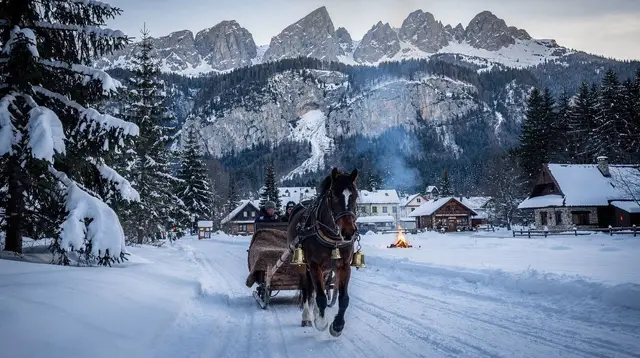
Thermal baths in the Podhale work year-round, and the appeal actually shifts with the season rather than shrinking outside summer. In winter, when snow covers the region and daytime temperatures sit well below the water’s 32 to 38 degrees Celsius, sitting in an outdoor pool with steam rising off the surface is a genuinely different experience from a summer visit — many locals treat the winter months as the best time to go for exactly this contrast. This also makes the baths one of the better answers to a Zakopane trip without skiing, for travellers visiting in the cold months who don’t ski.
In summer, the appeal is different: after a hot day of hiking in the Tatra National Park or walking the Chochołów village streets, the pools function as recovery rather than novelty, and the outdoor terraces get genuine use rather than being a curiosity. Spring and autumn sit in between, generally quieter than the Christmas–New Year and winter school holiday peaks, when every attraction in the region, baths included, gets busier and pricier. For a general sense of which season suits which kind of Podhale trip, evening visits are consistently the smarter move at any time of year — quieter pools and often better value than a midday slot.
Choosing Between Termy Chochołowskie and the Other Podhale Baths
Termy Chochołowskie is not the only thermal complex in the area, and it is not automatically the right one for every trip. Terma Bania in Białka Tatrzańska and Terma Bukovina in Bukowina Tatrzańska are both closer to the eastern Podhale ski areas, which matters if your base or your other plans sit on that side. Termy Szaflary and Gorący Potok sit closer to Zakopane itself, useful for a shorter outing without committing to the Chochołów side of the region.
If you are trying to weigh the options directly, the comparison of Zakopane-area thermal baths and the more decision-focused which thermal baths to choose both lay the choices out side by side, including which one suits families, which suits a quiet evening, and which pairs best with a specific base village like Kościelisko or Białka Tatrzańska.
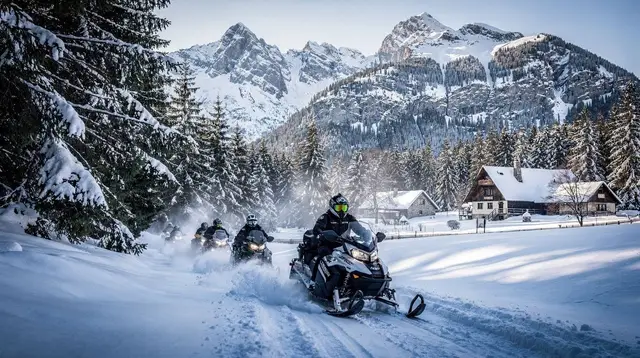
For travellers who want to combine the baths with something more active on the same day, a few organized options do exactly that. a quad-bike outing through the Podhale valleys followed by a soak in the thermal pools is one route to an active-plus-relaxed day without arranging transport twice, and a snowmobile-and-baths combination works the same way in winter, pairing a cold-weather adrenaline activity with the warmth of the pools afterward.
Fitting Termy Chochołowskie Into a Wider Trip
For most travellers, the baths are a half-day or evening addition rather than the centerpiece of a Zakopane stay, which makes them easy to slot into a longer itinerary. A two-day Zakopane weekend or a three-day classic Tatras trip both have natural gaps — a travel day, an evening after a hiking day, a rest afternoon — where a thermal soak fits without displacing the marquee sights like Morskie Oko or Giewont.
In winter specifically, a three-day winter Zakopane itinerary built around snow activities pairs naturally with an evening at the baths, and families following a three-day family itinerary often find the pools are the one stop that works for every age in the group at once, unlike a chained ridge walk or a long valley hike.
Frequently Asked Questions About Termy Chochołowskie
Are Termy Chochołowskie and the Chochołowska valley the same place?
No, and this is the single most common mix-up in the area. Termy Chochołowskie sits in the village of Chochołów. The Chochołowska valley, a Tatra National Park hiking valley famous for its spring crocuses, starts at Siwa Polana, about 10 km away on a different road. Same root name, two unrelated destinations.
How many pools does Termy Chochołowskie have, and what temperature is the water?
The complex has around 30 pools in total, with water temperatures spanning roughly 32 to 38 degrees Celsius across the different basins, indoor and outdoor.
Is Termy Chochołowskie really the largest thermal baths complex in Poland?
Yes, by pool count it is described as the largest thermal baths facility in the country, ahead of the other Podhale complexes such as Terma Bania and Terma Bukovina.
How do I get to Termy Chochołowskie without a car?
Private minibuses running from the Zakopane bus station area and Kościuszki street serve the thermal baths routes, so a rental car is not required for a normal visit. Confirm the current route and schedule locally, since minibus timetables shift by season.
Can I pay by card at Termy Chochołowskie and in Chochołów village?
Poland uses the złoty, not the euro, and cards are accepted almost everywhere, including most tourist-facing venues such as thermal baths. It is still worth carrying some cash for smaller stalls in the village.
What else is there to see in Chochołów besides the thermal baths?
Chochołów is considered the best-preserved wooden village of the Podhale, with around 50 log houses listed as protected in 1970 and whitewashed with soap every spring so the timber stays pale. A short walk through the village pairs naturally with a soak.
What are the current entry prices and opening hours for Termy Chochołowskie?
Specific prices and hours are not something to rely on from a general guide, since thermal baths pricing and schedules change with the season. Check the official source before you travel.
Winter adventures
Verified deep-linked GetYourGuide tours. Book through these links and we earn a small commission at no cost to you.
GetYourGuide does not provide a product photo for this activity — the image shows the meeting point, photographed by us.