What the Złoty Changes for Your Budget
A number on a receipt is not a number in my head
The first time I paid for a cable car ticket in Zakopane, I did the thing everyone does: I looked at the PLN figure, divided by roughly four, and decided it was cheap. Then I bought a coffee, did the same division, and decided that was cheap too. Then I looked at my card statement a week later and realised I had been quietly underestimating almost everything, because dividing by four in your head while standing in a queue at Kuźnice is not the same as budgeting. That gap between the number on the screen and the number you actually feel is, I think, the real story of the złoty in Zakopane — not that Poland is cheap or expensive, but that converting on the fly makes you bad at judging either.
Poland is not in the eurozone. Every price you see on Krupówki, on a Tatra National Park ticket machine, on a thermal baths entry board, is in złoty (PLN), VAT included, full stop. There is no eurozone rounding to lean on, no mental shortcut that works cleanly, and the exchange rate moves enough over a year that a number you remember from a previous trip is worth checking again rather than trusting.
Where cards work, and where they quietly don’t
This is the part I got wrong before my first visit: I assumed a small mountain town would be more cash-dependent than it is. In practice, cards are accepted almost everywhere — restaurants on Krupówki, the Gubałówka funicular and Kasprowy Wierch cable car ticket counters, the thermal baths, and most of the mountain huts (schroniska) inside the national park, which surprised me the first time I tapped a card at 1,500 metres.
What still wants cash, specifically:
| Where | Why cash matters |
|---|---|
| Horse carriages to Morskie Oko | Family-run, small transactions, drivers prefer cash |
| Nowy Targ market stalls | Cash-only vendors, cheese, leather, small goods |
| A handful of hut cafés | Card terminals unreliable at altitude, or simply absent |
| Tipping | Cash makes “keep the change” work cleanly |
I now carry a modest amount of PLN cash for exactly those four situations and put everything else on a card, which is the opposite of what I expected before I arrived.
Tipping is a different habit here
Tipping culture in Poland is more modest than in Western Europe, and it took me a couple of meals to stop over-tipping out of habit. Around 10 percent in a sit-down restaurant is generous and appreciated; elsewhere — a taxi, a hairdresser, a hut waiter carrying plates up a mountain — rounding up is the norm. Handing over cash and saying “dziękuję” while walking away signals “keep the change,” which is a small, useful phrase to know before you sit down anywhere.
Two currencies, one day trip
The detail that actually changes a budget spreadsheet, though, is the border. The Slovak Tatras are 30 to 60 km away across an open Schengen border — no passport control, just a line on the map — and Slovakia uses the euro. That means a day trip to Štrbské Pleso, Tatranská Lomnica or the Bachledka treetop walk at Ždiar is not a złoty day.
It’s a złoty morning and a euro afternoon, and if I hadn’t read that before my own trip across the border I would have arrived with the wrong cash in my pocket for a parking machine that doesn’t take cards. The fix is simple once you know it: carry a little of both, or lean on a card that doesn’t charge foreign transaction fees, and stop assuming one wallet covers the whole day. I go into the comparison in more detail in the Zakopane versus Slovak Tatras guide if you’re weighing a two-day Slovak side trip.
Where the złoty actually saved me money
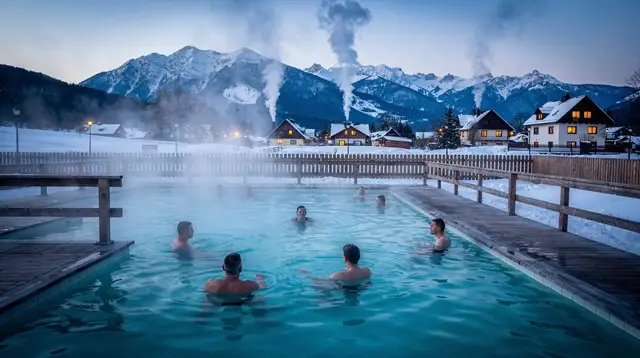
Once I stopped converting every price in my head, I noticed something else: the things I’d assumed would be a splurge — a thermal baths afternoon, a full day out from Kraków — were priced in a way that made sense locally, not against a mental euro benchmark. The Zakopane hot springs day tour from Kraków bundles transport and entry into one PLN price, which turned out easier to budget for than pricing the pools and the minibus separately. Same with a combined Morskie Oko and Zakopane day trip — one figure, taxes in, no surprise add-ons at the till.
If thermal baths are the plan on their own, a Zakopane thermal baths outing from Kraków is worth pricing against an evening session bought locally — evening entry is usually the cheaper slot, a detail I cover in the thermal baths comparison guide and the Termy Chochołowskie guide specifically. For a quieter, sauna-focused version, the Chochołowska baths sauna and spa day trip is priced the same way — everything folded into one złoty total rather than a chain of separate conversions.
What I’d tell myself before the first trip
Check the actual PLN-to-your-currency rate before you go, not the number you remember from last year, and use it for real budgeting rather than rough mental division — a currency budget tool or a currency converter does this better than a queue-side guess. Carry some cash for carriages, markets and hut cafés. Tip around 10 percent, or round up, and don’t import Western European tipping habits wholesale.
And if the Slovak side is on the itinerary, pack euros too — it’s a five-minute fix once you know it’s coming, and a mild headache at a parking machine if you don’t. None of this makes Zakopane expensive or cheap on its own; it just means the number on the receipt only tells you the truth if you stop translating it in your head. For the fuller picture of what a week actually costs, the Zakopane budget and złoty guide breaks down daily spending by category, and it’s the one I wish I’d read first.
FAQ: money and currency in Zakopane
Does Zakopane use the euro?
No. Zakopane is in Poland, and Poland uses the złoty (PLN). Prices for tickets, food and accommodation are shown in PLN, VAT included, not euros.
Can I pay by card everywhere in Zakopane?
Almost everywhere, including most restaurants, the cable car and funicular, the thermal baths, and most mountain huts. Horse carriages to Morskie Oko, some market stalls in Nowy Targ, and a few hut cafés are cash-only.
How much should I tip in Zakopane?
Around 10 percent in a sit-down restaurant is generous; elsewhere, rounding up the bill is the common local habit rather than a fixed percentage.
Do I need euros for a trip to Zakopane?
Not for Zakopane or the Polish side of the Tatras. You only need euros if you’re crossing into the Slovak Tatras for the day, since Slovakia uses the euro rather than the złoty.
Is it cheaper to exchange currency before arriving or in Poland?
Exchange rates and fees vary by provider on both sides; the more useful habit is checking the current PLN rate close to your trip date rather than relying on card conversion rates or a number from a previous visit.
Are national park and cable car tickets priced in złoty only?
Yes. Tatra National Park entry, the Kasprowy Wierch cable car and the Gubałówka funicular are all priced and sold in PLN, usually payable by card online or in person.
Why do some mountain huts only take cash?
Card terminals can be unreliable at altitude or simply not worth installing in a small, remote hut café, so a modest amount of PLN cash is a sensible backup even though most huts do take cards.
Popular day trips
Verified deep-linked GetYourGuide tours. Book through these links and we earn a small commission at no cost to you.
GetYourGuide does not provide a product photo for this activity — the image shows the meeting point, photographed by us.