Two Days on the Slovak Side of the Tatras
The border between the Polish and Slovak Tatras sits 30 to 60 km from Zakopane depending on where you cross, and under the Schengen agreement there is no passport control at all — you simply drive through. That openness fools people into thinking the Slovak side is a quick add-on to a Zakopane holiday. It isn’t, not without a car.
The minibuses that shuttle tourists between Zakopane and Kuźnice, Kiry or Palenica Białczańska do not run into Slovakia, and the public transport that does exist on the Slovak side — trains, the odd bus — was built to connect Slovak towns to each other, not to hand-deliver day-trippers from Poland to three sights in two days. You still need an ID document (a passport or national ID card), and the currency changes: Slovakia uses the euro, not the Polish złoty, so budget separately or carry a card that works on both sides.
This itinerary assumes you have a rental car, or have booked an organised trip that crosses the border for you. It covers two very different faces of the Slovak High Tatras: Day 1 is the classic lake resort of Štrbské Pleso, reached the old-fashioned way by the cog railway from Štrba.
Day 2 is higher and more technical — the cable car towards Tatranská Lomnica’s Lomnický štít, weather permitting — followed by the treetop walk at Bachledka near Ždiar, a gentler finish that works even when the high peaks are cloaked in cloud. Read how the Slovak side compares to the Polish one before you go, and see notes on driving conditions if you’re renting a car in Zakopane for the crossing.
Before you cross: car, currency, and what “no border control” really means
Schengen membership means you will not stop at a barrier or show a passport to anyone in a uniform at the frontier — the border crossing at Łysa Polana, the most direct route from Zakopane, is simply a road that changes country. That is not the same as needing nothing: carry a passport or EU national ID card anyway (rental agreements and hotels ask for it, and spot checks do happen), and know that Slovakia’s currency is the euro while Poland’s is the złoty, so your Polish złoty is not spendable once you’re over the line.
Card payment covers most things on both sides; carry a little cash in euros for parking machines and smaller cafés. If your rental car was hired in Poland, check the contract allows cross-border use into Slovakia — most standard agreements do, but it is worth confirming before day one, not discovering at a Slovak toll booth. Slovakia also runs its own toll-vignette system for motorways, sold at petrol stations near the border or online.
If you would rather not drive at all, look at organised trips that already build the crossing in for you — for instance a day trip from Zakopane that covers both Bachledka’s treetop walk and Štrbské Pleso in one run, which removes the car-rental and toll-vignette questions entirely and compresses this two-day loop into a single organised day. It won’t give you the Lomnický štít cable car — that one genuinely needs its own day and a car, or a specialised trip — but it solves the “no minibus crosses the border” problem for the two lower-altitude stops.
Travellers who decide the two-day loop is more than they need, and would rather see the wider range on one guided outing instead, can also look at a broader Zakopane and the Tatra Mountains tour — it stays on the Polish side of the range and is not a substitute for the crossing described here, but it’s worth knowing about before committing two full days and a rental car to Slovakia.
Day 1: Štrbské Pleso by cog railway
Route: Zakopane → Łysa Polana border → Poprad or Štrba (via the E77/road network) → Štrbské Pleso. Figure on roughly 1.5 to 2 hours of driving each way depending on the exact crossing and traffic, more in ski season.
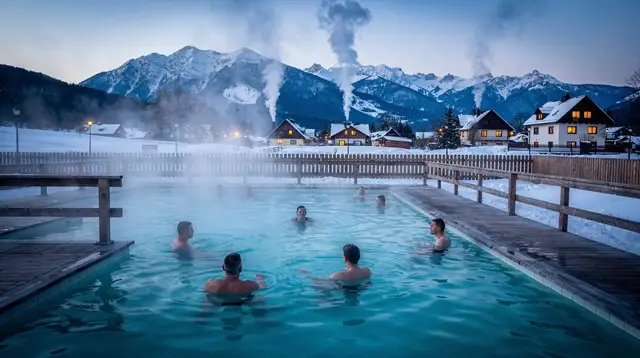
Štrbské Pleso sits at 1,346 m, a glacial tarn ringed by spruce forest with the High Tatras’ granite wall rising directly behind it — one of the most photographed views in Slovakia, and deservedly so. Two things make it worth a full day rather than a quick photo stop. First, the lake itself: a level, paved path circles it in about 30 to 40 minutes, an easy walk after a morning of driving, with the classic reflection shot best attempted early, before the wind picks up and before the tour buses arrive.
Second, and the reason to structure the whole day around it: the approach. Rather than driving all the way up, park in the town of Štrba below and take the cog railway (ozubnicová železnica) up to the resort — a short, steep ride through spruce forest that is part of the experience, not just transport. It runs year-round and saves you the parking headache at the top in peak season, when spaces fill by mid-morning. Full details, including current timetables and ticket prices, are in the Štrbské Pleso lake guide.
Štrbské Pleso is frozen roughly 155 days of an average year — from around December into April — which changes the visit completely: cross-country ski trails replace the lakeside walk, and the frozen surface itself becomes part of the scenery rather than a mirror for the peaks. If you’re travelling outside summer, check conditions before you set your heart on the reflection photo.
From the lake, short marked trails climb further into the mountains for those who want more than the lakeside loop — the walk towards Popradské pleso, a second, wilder tarn about two hours further on foot, is the natural extension if you have the afternoon and decent weather. Otherwise, allow time on the way back for Poprad, the regional hub town, if you want a coffee stop or a look at its old town square before the drive back to Zakopane. See the Poprad and Kežmarok page for what else sits along that road.
Where this day can go wrong: treating it as a quick stop. The drive alone eats 3 to 4 hours round trip; add the cog railway and the lakeside walk and you have a full day, not a morning detour. Don’t stack Štrbské Pleso onto a day that also tries to include Tatranská Lomnica — the distances and the two very different activities (a lakeside walk versus a high-altitude cable car) don’t fit in one day without rushing both.
Day 2: Tatranská Lomnica, Lomnický štít, and Bachledka at Ždiar
Route: overnight base (Zakopane, or a hotel on the Slovak side if you prefer to split the driving) → Tatranská Lomnica → Ždiar/Bachledka → back across the border to Zakopane. Roughly 40-50 km separate the two Slovak stops, an easy drive between them.
Start early at Tatranská Lomnica, a resort town that is the base station for the cable car towards Lomnický štít, at 2,634 m the second- highest peak in the Slovak Tatras and one of the highest points reachable by cable car in Central Europe.
This is the most weather-dependent stop in the entire itinerary, and it needs to be said plainly: the cable car to the top does not run in poor visibility, high wind, or storm conditions, and neither this page nor anyone else can promise you a ride. Check conditions the morning of, have a fallback plan, and read the operating details — including capacity limits, which mean tickets for the upper section are timed and can sell out on clear days — in the Tatranská Lomnica and Lomnický štít cable car guide before you commit the morning to it.
A lower cable-car section to Skalnaté Pleso, a smaller tarn partway up, runs more reliably and is a reasonable fallback if the summit section is closed.
By early-to-mid afternoon, drive on to Ždiar, a Goral village of traditional wooden houses about 30-40 minutes away, for the Bachledka treetop walk. This is deliberately the second half of the day rather than the first: it’s a lower-altitude, weather-resistant activity that works even if the morning’s cable car got cancelled or the clouds never lifted off Lomnický štít — a sensible hedge built into the day’s order, not an afterthought.
The walkway itself runs 1,234 m at up to 24 m above the forest floor, with a viewing tower and a spiral slide back down; it’s step-free and works for strollers and most mobility needs, a contrast to the technical, weather-locked cable car earlier in the day. Full practical detail — tickets, what the slide involves, opening months — is in the Bachledka treetop walk guide.
If Lomnický štít is closed for weather and you want a different anchor for the morning instead, Orava Castle, roughly an hour further west, is a striking hilltop fortress that works regardless of cloud cover — see the Orava Castle page and the Orava Castle and Belianska Cave day trip guide for whether it fits your timing; it pushes the day longer, so treat it as an alternative to Tatranská Lomnica rather than an addition to it.
By late afternoon, drive back across the border to Zakopane — the return leg via Łysa Polana takes about the same 1.5 to 2 hours as the outbound one, longer if you’re driving in winter conditions or after fresh snow.
What this two-day loop deliberately leaves out
Two days is not enough to also fit Ždiar’s village walk in depth, Belianska Cave (a worthwhile stop but one that adds a couple of hours and sits slightly off this route), or a serious hike above either resort. It also isn’t a skiing itinerary — both Štrbské Pleso and Tatranská Lomnica have ski infrastructure, but this plan is written for the shoulder and summer seasons, when the lake walk and the treetop walk are both open and pleasant. If you want a longer, slower version that adds Poprad, Kežmarok and more hiking time, see the 7-day Tatras and Pieniny itinerary, which folds this same two-day core into a longer trip.
Slovak Tatras in two days: costs and practical comparison
| Item | Day 1 (Štrbské Pleso) | Day 2 (Lomnický štít + Bachledka) |
|---|---|---|
| Driving from Zakopane | ~1.5-2h each way | ~1.5-2h each way (via Ždiar) |
| Currency needed | Euro | Euro |
| Weather sensitivity | Low (lake walk works in most conditions) | High (cable car to the summit needs clear weather) |
| Step-free / family friendly | Yes, lakeside path is level | Bachledka yes; the cable car summit less so |
| Realistic without a car | Difficult — no direct minibus link | Difficult — same border limitation |
For a sense of what euros versus złoty does to your daily spending across the two countries, see what the złoty changes for your budget and the wider Zakopane budget guide. Many travellers also find the Slovak side noticeably less crowded than the Polish one in peak season — worth reading in why the Slovak side is cheaper and less crowded before you decide which country gets your busiest travel day.
Frequently asked questions about the two-day Slovak Tatras loop
Do I need a passport to cross from Poland into Slovakia here?
There is no border control at the Łysa Polana crossing or elsewhere along this stretch — both countries are in the Schengen area, so you simply drive through. You should still carry a passport or EU national ID card: rental car paperwork, hotels, and occasional spot checks all expect it, even without a formal border post.
Can I do this trip by public transport instead of driving?
Not comfortably. Polish minibuses from Zakopane stop at the Polish trailheads and do not cross into Slovakia, and Slovak public transport was not built to connect day-trippers from Poland to Štrbské Pleso, Tatranská Lomnica and Ždiar in a tight two-day window. A rental car, or an organised cross-border trip such as one covering the treetop walk and Štrbské Pleso in a single day, is the realistic option.
Is the Lomnický štít cable car guaranteed to run?
No. The upper section to the 2,634 m summit closes in poor visibility, high wind, or storms, and this itinerary cannot promise it will run on your chosen day. Check conditions that morning, and have the lower Skalnaté Pleso section or an alternative stop such as Orava Castle as a fallback.
What currency do I need on the Slovak side?
Euros. Slovakia is in the eurozone; Poland uses the złoty. Cards work in most places on both sides, but carry some euro cash for parking machines and smaller village cafés around Ždiar.
Is Štrbské Pleso worth visiting if the lake is frozen?
Yes, but the visit changes character. Frozen roughly 155 days of an average year, the lake becomes a cross-country skiing and winter-walk destination rather than a photogenic mirror for the peaks; the cog railway up from Štrba still runs year-round either way.
Is the Bachledka treetop walk suitable for young children or strollers?
Yes. The 1,234 m walkway is step-free, which makes it a reliable choice for families, especially as a fallback if the Lomnický štít cable car is weather-closed that morning.
Can I fit Belianska Cave into this same two days?
Not really, without cutting something else. Belianska Cave sits close to this route but adds a couple of hours; treat it as an option for a longer trip such as the 7-day Tatras and Pieniny itinerary rather than squeezing it into this two-day loop.
Should I book a Slovak hotel instead of returning to Zakopane each night?
Either works. Basing in Zakopane keeps you on Polish złoty and closer to the rest of your Tatras trip; splitting a night on the Slovak side cuts driving time on Day 2 if you want an earlier start at Tatranská Lomnica, at the cost of managing two currencies and two check-ins.
tours.2 days
Verified deep-linked GetYourGuide tours. Book through these links and we earn a small commission at no cost to you.
GetYourGuide does not provide a product photo for this activity — the image shows the meeting point, photographed by us.