Tatras, Pieniny and Slovakia: A 7-Day Road Trip Itinerary
Why a week buys you three countries’ worth of mountains
Seven days and a car are enough to string together the Polish Tatras, the Pieniny gorge and a real slice of the Slovak Tatras without any single day turning into a rush. The shape that works is not a straight line: it is Zakopane as a base for the first four days, a shift east to the Pieniny for the raft, and then a crossing south into Slovakia for the last two. Two things in this plan get skipped by itineraries that try to move faster than a week allows: the Dunajec raft only runs April to October, and the Slovak side is not a lunchtime detour — the drive, the currency switch and the sights themselves fill two full days, not one.
Base yourself in Zakopane for Days 1 to 4, move to Szczawnica or stay in Zakopane and drive out for Day 5, then either sleep on the Slovak side for Days 6 and 7 or make Zakopane your base throughout and drive back each evening — both work, since nothing on the Slovak leg is more than about 60 km from town.
| Day | Focus | Driving |
|---|---|---|
| 1 | Arrival, Krupówki, orientation | — |
| 2 | Gubałówka, Zakopane style, rope park | Local only |
| 3 | Morskie Oko | 25 km to Palenica, 9 km on foot |
| 4 | Kasprowy Wierch | Local, cable car from Kuźnice |
| 5 | Dunajec raft, Sromowce to Szczawnica | About 60 km to Sromowce |
| 6 | Cross into Slovakia, Štrbské Pleso | 30-60 km, border-free |
| 7 | Slovak Tatras, return | Variable, plus the drive back |
Day 1: Arrival and Krupówki
However you arrive — bus or train from Kraków, or a drive from KRK airport — treat the first afternoon as orientation, not a mountain day. Walk the length of Krupówki, Zakopane’s one pedestrian street, past the wooden villas and the grilled oscypek stalls, and get your bearings between the bus station, Kościuszki street (where the minibuses to the trailheads leave from) and the base of the Gubałówka funicular.
This is also the evening to book what needs booking: the Palenica Białczańska car park for Day 3 and, if the dates are close, the Kasprowy Wierch cable car for Day 4. Both routinely sell out days ahead in the warmer months. Dinner: kwaśnica or a plate of pierogi, and an early night — Day 3 starts early.
Day 2: Gubałówka and the town itself
Take the funicular up to Gubałówka in the morning for the clearest view of the full Tatra chain before any afternoon haze builds, then walk the ridge toward Butorowy Wierch, thirty to forty-five minutes each way, chairlift down if legs are tired. Back in town, spend the rest of the day on what makes Zakopane’s architecture distinct: the Zakopane style villas, the old church and the Pęksowy Brzyzek cemetery, and the Tatra Museum if wooden building history interests you. If the group includes children or anyone who wants a lower-key afternoon, the rope park at the top of Gubałówka fills a couple of hours well.
a rope course strung through the trees at the top of the funicular is booked as a timed slot and pairs naturally with the ride up.
Day 3: Morskie Oko — the reserved car park is not optional
This is a full day, and it starts with logistics that must be settled the night before. Morskie Oko sits behind the Palenica Białczańska car park, about 25 km from Zakopane — and that car park must be reserved online in advance, not paid for on arrival.
No car, taxi or bus goes past Palenica: from there it is 9 km of paved track on foot, two to three hours each way with about 400 m of climb, or a horse carriage as far as Włosienica, roughly 1.5 km below the lake, with twenty minutes on foot to finish. Carry your Tatra National Park ticket; it is checked on this trail like every other. Fit walkers who start early can continue fifty minutes past the lake to Czarny Staw, a quieter, higher tarn with Rysy rising above it — worth it if the legs and the weather both hold.
a guided day at Morskie Oko that handles the parking and the walk for you is the easiest way to do this day without managing the reservation yourself, and a reasonable choice if the online car park is already full for your date — see the booking guide for Morskie Oko and Kasprowy for what to do when that happens.
Day 4: Kasprowy Wierch — the ticket is dated and timed
The cable car to Kasprowy Wierch leaves from Kuźnice, which is closed to private cars: walk thirty to forty minutes from the centre, take a minibus, or park at Rondo Kuźnickie. Tickets are sold online for a specific time slot, up to two hours ahead, and they sell out on clear days in season — this is not a queue-and-wait attraction. The ride itself takes about twenty minutes with a change partway up, arriving at 1,959 m with the full ridge laid out below.
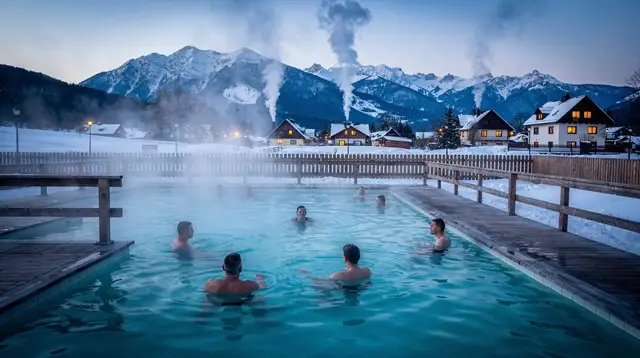
From the top station, strong walkers can continue along the ridge toward Kopa Kondracka, while a gentler option drops to Hala Gąsienicowa. Whatever the wind is doing, check before you plan the rest of the day around this ride: Kasprowy closes in high wind and for maintenance in late autumn and parts of spring, with no makeup slot offered. Back in town, an evening thermal soak is a good reset before tomorrow’s longer drive — see the comparison of the area’s thermal baths.
Day 5: The Dunajec — and only in season
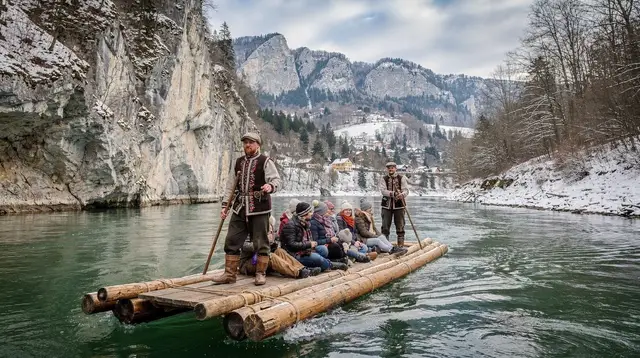
Drive roughly 60 km to Sromowce for the traditional raft descent through the Dunajec gorge: wooden rafts, two raftsmen with poles, about 18 km and two and a half hours down to Szczawnica, through limestone walls that rise to 300 m, with the river marking the Polish-Slovak border for much of the way.
This only runs from 1 April to 31 October — if your week falls outside that window, do not try to substitute a walk along the riverbank for the raft itself; instead spend the day on Trzy Korony above Szczawnica or at Niedzica castle and Lake Czorsztyn, both open year-round. July and August are the crowded peak on the water; a morning departure avoids the worst of it.
the guided raft trip through the gorge on the traditional wooden boats covers transport to the put-in, which otherwise takes real planning on your own. Spend the night in Szczawnica or drive back to Zakopane — either works, since Day 6 starts from either point at similar distance.
Day 6: Crossing into Slovakia — budget the whole day for it
This is the day itineraries built for speed get wrong: the border itself takes no time under Schengen — no checkpoint, no stamp — but everything around it does. Carry a passport or ID card anyway, since car insurance and rental terms assume you have it even when no one asks. The real adjustment is the currency: Slovakia uses the euro, Poland the złoty, and this is not a country where Polish cash works at the till — sort euros or a fee-free card before you leave, not at your first Slovak stop.
From Szczawnica or Zakopane, the drive to Štrbské Pleso runs 30 to 60 km depending on your start point, on mountain roads that are slower than the distance suggests. Spend the afternoon at the lake itself, at 1,346 m, ringed by peaks and quiet compared with anything on the Polish side in high season — a genuine change of pace, not a photo stop. If there’s time and energy left, the treetop walk at Bachledka near Ždiar is close by and works well paired with this lake.
a day trip from Zakopane that combines the treetop walk with Štrbské Pleso is worth booking if you’d rather not navigate Slovak roads and parking yourself on a day that already has enough logistics in it.
Day 7: Deeper into the Slovak Tatras, then back
Use the second Slovak day for whichever of the region’s sights suit the group best: the cable car from Tatranská Lomnica up toward Lomnický štít for the highest views on either side of the border, the show cave at Belianska, or a slower town morning in Kežmarok or Poprad before the drive home. Families who found Day 6 enough can instead take a second, easier pass at Štrbské Pleso or the Bachledka treetop walk rather than adding another long drive.
Whichever you choose, build in the return drive to Zakopane or onward to Kraków for a flight — the roads here are scenic but slow, and the last day of a full week is the wrong place to discover that a “quick” Slovak loop runs long. For onward travel, see the Kraków to Zakopane transport guide and the notes on driving the Zakopianka if you’re heading back that way by car.
Making this itinerary yours
- No car available? Days 1, 2 and 4 work without one; Day 3 is reachable by minibus to Palenica; Days 5 to 7 are genuinely hard without a car and are better booked as guided days — see the shorter 4-day Tatras without a car itinerary for how that version is shaped.
- Shorter on time? The 3-day classic Tatras itinerary keeps Days 1 to 4 of this plan and drops the Pieniny and Slovakia entirely.
- Want the Slovak side as its own trip? See the dedicated 2-day Slovak side itinerary.
- Winter travel? This route depends on the Dunajec season and on Kasprowy staying open; read the Zakopane or the Slovak Tatras: Which Side to Visit comparison and the seasonal Kasprowy notes before committing to these exact days outside May to September.
Questions about this 7-day route
Do I need a car for this itinerary?
Yes. Public minibuses cover Zakopane’s own valleys, but the Dunajec put-in at Sromowce and the drive to Štrbské Pleso are impractical without one, and a car is what makes a seven-day loop through three regions realistic in a week.
Is the Dunajec raft available year-round?
No. The wooden rafts run from 1 April to 31 October only. If your seven days fall outside that window, swap Day 5 for another Pieniny walk, such as Trzy Korony above Szczawnica, and skip the raft entirely rather than expecting a substitute in winter.
How far in advance should I book Morskie Oko parking and Kasprowy Wierch tickets?
Book the Palenica Białczańska car park online as soon as your dates are fixed, and the Kasprowy Wierch cable car a few days ahead in July to September. Both sell out on fine-weather days, and neither can be bought on arrival once full.
Do I need my passport to cross into Slovakia?
There is no border checkpoint under Schengen, but carry a passport or national ID card anyway. Car rental terms, insurance and the odd spot check all assume you have it, even though no one stamps anything.
What currency do I need in Slovakia?
The euro. Poland uses the złoty and is not in the eurozone, so the Slovak side of this trip needs euros or a card that handles the switch without a poor exchange rate — plan this before Day 6, not at a Štrbské Pleso kiosk.
Is this itinerary suitable for families?
The Zakopane, Gubałówka and Štrbské Pleso days work well with children. Morskie Oko’s 9 km walk and Kasprowy Wierch’s altitude are longer days out; the horse carriage to Włosienica shortens Morskie Oko for smaller legs.
Can this route be done without visiting Slovakia?
Yes — drop Days 6 and 7 and this becomes a five-day Tatras and Pieniny loop. But treat the Slovak side as its own two days if you keep it: the border adds no delay, but the distances and the currency change do add real time.
What if the Kasprowy Wierch cable car is closed by wind?
It happens without much notice, most often in autumn and spring. Keep Day 4 flexible enough to swap in a lower-altitude walk, such as Rusinowa Polana or the Kościeliska valley, rather than losing the day.
tours.7 days
Verified deep-linked GetYourGuide tours. Book through these links and we earn a small commission at no cost to you.
GetYourGuide does not provide a product photo for this activity — the image shows the meeting point, photographed by us.