Orava Castle turns up on most lists of things to see on the Slovak side of the Tatras, usually in the same breath as Štrbské Pleso, Tatranská Lomnica and the Bachledka treetop walk. It belongs in that company, but it sits in a different direction and a different kind of day. This page treats it honestly: as a cross-border excursion into the Orava and Liptov regions of Slovakia, worth a full day of anyone’s trip, not as a quick detour to file alongside a morning at Gubałówka or an afternoon on Krupówki.
Where Orava Castle and the Liptov region actually sit
The Slovak Tatras, as covered elsewhere on this site, cluster around the High Tatras resorts closest to Zakopane: Štrbské Pleso, Tatranská Lomnica, and the Ždiar and Bachledka treetop walk area, with Poprad and Kežmarok as the lowland towns nearby.
Orava Castle and the wider Liptov region — home to the Tatralandia aquapark near Liptovský Mikuláš — sit further north-west, in a different valley system on the Slovak side. They still fall within the same rough distance bracket used across this site for the Slovak Tatras: somewhere in the order of 30 to 60 km from Zakopane, depending on exactly which town or attraction you’re measuring to and which road you take.
That range matters more than a single number here. Zakopane to Štrbské Pleso is a different drive from Zakopane to the Orava region, even though both get filed under “Slovak Tatras” for planning purposes. Anyone building a Slovak-side day should check the specific route to Orava and Liptov rather than assuming it mirrors a trip to the High Tatras resorts — the roads, the driving time, and the towns you pass through are not the same.
What crossing the border for this actually involves
Poland and Slovakia are both in the Schengen area, so there is no border control post to stop at, no passport stamp, and in practice the crossing can feel like driving from one region of the same country to another. That doesn’t mean it’s worth ignoring: carry an ID document or passport regardless, because Schengen removes routine checks, not the legal requirement to be able to identify yourself if asked.
The more practical shift is currency. Slovakia uses the euro; Poland uses the złoty. Cards are accepted at most attractions on the Slovak side, including places like Tatralandia, but euro cash is worth having for smaller purchases, parking, or a café that prefers cash. Anyone doing a Slovak-side day trip should plan to arrive with euros already in hand rather than hunting for an exchange counter once there — see the budget and złoty guide for how the two currencies play out across a longer Zakopane trip.
Orava Castle: what this guide will and won’t tell you
Orava Castle is a well-known stop on Slovak-side itineraries, built on high ground above the Orava river near Dolný Kubín. Beyond that, this page is deliberately careful: it will not invent details about the castle’s interior, its exhibits, its history, or what a tour inside actually covers. Those specifics change with opening hours, ticket categories, and what’s on display in a given season, and getting them wrong is worse than leaving them out. Anyone planning the visit should confirm current information — opening times, ticket prices, guided-tour languages — through the castle’s own visitor channels or through whichever operator runs the day trip, rather than trusting a fixed description written months in advance.
What can be said with confidence: it’s a hilltop castle that photographs well from a distance, it’s one of the reasons Orava turns up on Slovak Tatra sightseeing lists alongside Liptov’s aquaparks, and it’s far enough from Zakopane and from the immediate High Tatras resorts that it makes more sense as its own day than as a stop bolted onto another itinerary. A guided option that already includes Orava alongside another stop on the way, like the Orava Castle and Demänovská Cave day trip from Zakopane, removes the guesswork of finding parking and timing a visit independently, though self-driving remains an option for anyone who prefers to set their own schedule.
Tatralandia and the Liptov aquapark scene
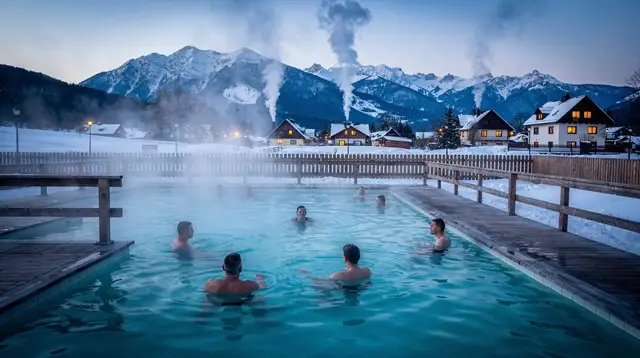
The other reason Orava and Liptov appear together on Slovak-side lists is Tatralandia, the large aquapark near Liptovský Mikuláš. It’s a genuinely different kind of stop from anything on the Polish side of the border covered by this site’s thermal baths comparison or the guide to choosing between the Tatra thermal baths — larger in scale, aquapark-format rather than the quieter thermal-pool model of Termy Chochołowskie or Terma Bania back on the Polish side.
Pairing a morning at Orava Castle with an afternoon at Tatralandia, or the reverse, is the logical way to structure the day once the drive across the border is already committed to.
It’s worth being clear-eyed about what that pairing costs in time. Orava Castle sits north-west of the main Liptov aquapark area; getting from one to the other, on top of the drive out from Zakopane and back, adds up to a full schedule rather than a loose morning. Anyone trying to compress both into a half-day alongside anything else in the Tatras is setting up a rushed visit to both.
Why this is a full day, not a morning add-on
It’s tempting to think of a Slovak border crossing the way you’d think of a short hop to a neighbouring town — pop over, look around, pop back. Orava and Liptov don’t work that way from a Zakopane base, for three concrete reasons.
First, the distance itself: even at the lower end of the 30-60 km range, add the drive time on unfamiliar roads, a stop at the castle, and time at Tatralandia or another Liptov attraction, and the round trip fills most of a day on its own. Second, the border crossing, while free of checks, still means driving in a country where road signage, fuel stops and local driving habits are unfamiliar — nothing dramatic, but not something to rush through at the end of a tiring hiking day. Third, the two anchor attractions — a castle and an aquapark — are different enough in pace and purpose that doing both properly, rather than glimpsing each from a car park, takes real hours.
The honest comparison is with other Slovak-side day trips already covered on this site. A day at Štrbské Pleso or the Lomnický štít cable car at Tatranská Lomnica is built around a single dominant activity close to the border. A day toward Orava and Liptov is built around two attractions further from the border, in a different direction from the High Tatras resorts. Treating it as a lighter version of the same trip underestimates both the driving and the amount there is to actually do once you arrive.
Two ways to plan the day
For travellers without a rental car, or who would rather not navigate an unfamiliar country’s roads after a demanding hiking trip, an organized day tour is the straightforward route. Beyond the Orava-and-cave combination already mentioned, broader multi-stop Slovak-side tours exist too — a trip like the 2 Day High Tatras and Spiš Castle tour covers castle sightseeing on the Slovak side over more than one day, which suits travellers who’d rather see Orava, Spiš and the High Tatras as a connected block instead of a single rushed day.
For a shorter Slovak-side outing that stays closer to the border and pairs a treetop walk with a lake rather than a castle, the treetop walk and Štrbské Pleso trip is the better fit — useful context for deciding which kind of Slovak day actually matches the rest of a Zakopane itinerary.
For self-drivers, the calculation is different: more flexibility on timing, but the responsibility of route-planning, parking at both the castle and at Tatralandia, and managing euros for tolls, parking and tickets along the way. Anyone weighing this against organized options should also read the general driving to Zakopane and the Zakopianka guide for a sense of how road conditions and traffic on the Polish side factor into the start and end of the day, since the drive to the border begins on the same roads.
Fitting Orava and Liptov into a longer trip
A one-off day to Orava Castle and Liptov works best when it’s one distinct chapter in a longer Zakopane stay, not an attempt to see everything Slovak in a single outing. Travellers with more time who want to properly cover the Slovak side, rather than squeeze it into a single day, are better served by the dedicated two-day Slovak side itinerary or, for a longer combined trip, the seven-day Tatras and Pieniny with Slovakia itinerary, both of which give the High Tatras resorts and the Orava/Liptov direction separate days rather than compressing them.
For a first Zakopane trip still deciding how much time to allot overall, the first-time Zakopane planning guide is the place to work out whether a Slovak day — Orava-and-Liptov or High Tatras-focused — fits the schedule at all, and the Zakopane versus the Slovak Tatras comparison lays out how the two sides of the border differ in character, which helps decide whether Orava and Liptov, specifically, are the right Slovak stop rather than Štrbské Pleso or Tatranská Lomnica.
Travellers who’d rather not plan any of this themselves, whether for a single day or across a longer stay, can also look at a Zakopane and thermal baths day trip from Kraków as a comparison point — a reminder that not every cross-border or multi-stop day needs independent planning, and that a privately guided option exists for travellers who’d rather have someone else handle the route, the parking and the border crossing entirely.
When to go
Orava Castle’s grounds and Tatralandia’s outdoor pool sections both work best from late spring through early autumn — roughly May to September — when the weather supports being outdoors at both a hilltop castle and an aquapark for most of the day. Outside that window, Tatralandia’s indoor pools generally keep operating even in colder months, but a castle visit in winter conditions is a different, colder proposition, and driving across the border in snow adds another layer of planning on top of an already long day.
Anyone considering this trip in winter should weigh it against the driving conditions guide and consider whether an organized tour, which removes the self-drive risk, makes more sense for that season.
FAQ: Orava Castle and the Liptov region from Zakopane
How far is Orava Castle from Zakopane?
It falls in the same broad 30-60 km bracket as the other Slovak Tatra sites covered on this site — Štrbské Pleso, Tatranská Lomnica and Ždiar — though Orava itself sits further north-west, toward the Orava and Liptov regions rather than directly across from Zakopane.
Do I need a passport to visit Orava Castle from Poland?
Both Poland and Slovakia are in the Schengen area, so there are no border checks on the road. Carrying an ID document or passport is still sensible practice for any cross-border trip, even where no one asks to see it.
What currency do I need in the Liptov region?
Euros. Slovakia uses the euro, unlike Poland, which uses the złoty. Card payments are widely accepted at attractions like Tatralandia, but cash in euros is worth having for smaller stops.
Can Orava Castle be combined with Tatralandia in one day?
Yes, and this is the natural pairing for the Liptov side of a Slovak day trip — the castle sits north-west toward Dolný Kubín, and Tatralandia is near Liptovský Mikuláš. Combining them, plus the drive each way and the border crossing, fills a full day rather than a morning.
Is Orava Castle worth visiting on its own, without an organized tour?
It can be done independently by car, but most travellers based in Zakopane without a rental car find it easier to join an organized day trip that already bundles Orava, a cave visit or another Liptov stop, and the transport logistics of the border crossing.
What should I actually expect to see at Orava Castle?
This guide deliberately does not describe interior rooms, exhibits or historical detail it hasn’t verified — treat it as a hilltop castle worth the detour and confirm current opening hours, ticket options and what’s on display through the castle’s own visitor information before you go.
Is a trip to Orava Castle better than staying in the Tatras for the day?
It depends on what the rest of the trip already covers. If Štrbské Pleso, Tatranská Lomnica or the Bachledka treetop walk are already on the itinerary, Orava and Liptov make sense as a different kind of day — lower-altitude, castle-and-aquapark rather than mountain trail — rather than a repeat of the same scenery.
How does a self-drive day to Orava Castle compare to a booked tour?
Self-driving gives more control over timing but means navigating an unfamiliar country’s roads and parking on the fly. A booked day trip removes that planning but fixes the schedule — worth weighing against how comfortable the trip is with a rental car crossing borders.