Cycling and E-Bike Routes in the Podhale Valleys
Where can you actually cycle near Zakopane?
Two valleys inside Tatra National Park allow cycling: the flat first stretch of the Chochołowska valley from Siwa Polana, and the paved 9 km track through the Kościeliska valley from Kiry. Both are shared with walkers on foot, dogs are banned in Kościeliska but allowed in Chochołowska up to the mountain hut, and riding off these two tracks onto marked hiking trails is not permitted anywhere in the park.
The short list of places you can actually ride
Most of the Polish Tatras are off limits to bikes. The marked trails that climb toward Giewont, Morskie Oko or the Valley of Five Polish Lakes are for walking only, and riding on them is a rule violation inside a national park, not a grey area.
What is genuinely open to a bicycle or an e-bike is narrower and simpler than most visitors expect: the first, flat stretch of the Chochołowska valley from the Siwa Polana entrance, and the paved 9 km track through the Kościeliska valley from Kiry. Both sit inside Tatra National Park, both require the same entry ticket as every other trail, and both are shared, low-traffic-speed routes used by walkers, prams and, in Chochołowska, horse-drawn carts as much as by riders.
This page covers those two valleys specifically: what the riding is actually like, where the flat ground ends, who can bring a dog, and when the season works for it. It does not cover mountain-bike descents, forest-road loops outside the park, or any claim about riding the high trails — none of that exists here, on purpose.
Chochołowska valley: the longest valley, a flat opening stretch
Chochołowska is the longest valley in the Polish Tatras, running deep south from the Siwa Polana car park toward the Slovak border ridge. Its full length is a serious walking day, largely uphill past the halfway point. The part that concerns a cyclist is different: the opening section from Siwa Polana is close to flat, wide, and covered in a firm gravel-and-tarmac surface built to carry horse carts as well as foot and bike traffic.
It is this first stretch, not the whole valley, that a small road train and a local bike-hire point serve, and it is this stretch a guided Chochołowska bike outing with transfer from Zakopane is built around.
Past that opening flat, the valley narrows, the surface roughens, and the gradient picks up toward the Chochołowska mountain hut. Riders who want to keep it easy simply turn back at the point the track stops being comfortably flat, which is a personal call rather than a marked boundary — there is no gate or sign that says “cycling ends here.” Anyone planning to go all the way to the hut and back on two wheels should expect a genuinely longer, hillier ride than the first kilometres suggest, and should budget the return distance too, since it is the same track both ways.
Chochołowska has one feature no other valley in this guide shares: it is the only place in Tatra National Park where dogs are allowed, and only as far as the hut, plus along the connecting Droga pod Reglami path. Everywhere else in the park — including the whole of Kościeliska below — dogs are banned outright. For anyone riding with a dog on a lead, that single rule decides which valley to choose.
Kościeliska valley: 9 km of paved, gentle track
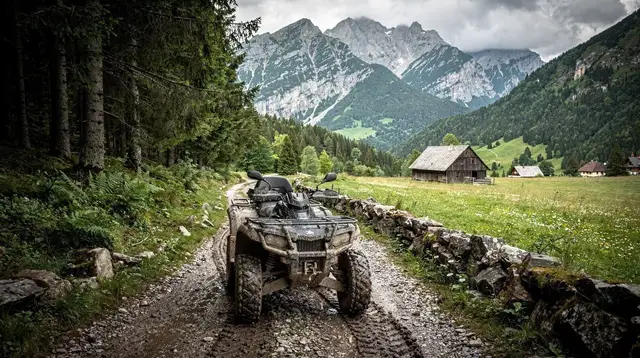
The Kościeliska valley starts at the Kiry entrance, about 8 km west of Zakopane, and its defining feature for a cyclist is consistency: roughly 9 km of paved track running at a gentle, largely level gradient the whole way, wide enough for two-way foot, pram and bike traffic without much friction. It is the route this site also recommends as a family hike with a pram, and the same qualities — firm surface, shallow gradient, tree shade for most of its length — make it comfortable on a bike without needing an e-bike’s assistance, though an e-bike works here just as well as a standard one.
Along the way the valley passes two show caves, Mroźna and Raptawicka, both a short walk off the main track, and the Ornak mountain hut sits near the valley’s head, with a side trail to the Smreczyński pond for anyone who wants to stop and walk rather than ride the full distance. Kościeliska has no bike-hire point of its own the way Chochołowska’s opening section does, so riders typically bring their own bike or arrive already equipped.
The one firm restriction here is dogs: none are allowed anywhere in the Kościeliska valley, a stricter rule than Chochołowska’s hut-only allowance. A rider with a dog should plan on Chochołowska instead, not Kościeliska.
Comparing the two valleys
| Chochołowska (from Siwa Polana) | Kościeliska (from Kiry) | |
|---|---|---|
| Flat, easy stretch | First section only, then narrows and climbs | Full 9 km, consistently gentle |
| Surface | Gravel and tarmac, built for horse carts too | Paved, pram-friendly |
| Dogs | Allowed to the hut and Droga pod Reglami only | Not allowed anywhere |
| Bike hire nearby | Yes, plus a small road train | No dedicated hire point |
| Caves and side stops | None on the flat section | Mroźna and Raptawicka caves |
| Best for | A guided ride with transfer, or riders going further to the hut | Families, prams, the most predictable surface |
What the park actually allows on a bike
A Tatra National Park entry ticket is required on both of these tracks, exactly as it is on every other marked trail in the park — cycling does not exempt a rider from buying one. Beyond that, the rule that matters most is the narrowest one: riding is confined to these two valley tracks and nowhere else.
There is no version of this rule that opens up the path to Morskie Oko, the ridge toward Kasprowy Wierch, or any other marked hiking trail to a bicycle, e-bike included. An e-bike is treated as a standard bicycle for these purposes — pedal assistance does not grant access to ground that is otherwise closed to wheels, and it does not exempt a rider from the same trail-only, ticket-required rules as anyone walking.
The park’s other standing rules apply on a bike as much as on foot: no drones, no wild camping, and daylight hours only. None of that changes because the wheels are motorised by a battery rather than a pair of legs.
When to ride
The Chochołowska crocus bloom, a carpet of small purple flowers that opens for about two weeks from early April, covers exactly the flat opening stretch a cyclist would use, which means the same days that make Chochołowska’s spring famous also bring the heaviest foot traffic of the year onto a shared track — riding is possible but slow and crowded during the bloom itself. Snow can sit above roughly 1,500 metres well into May and even June in a cold year, which affects the upper valley more than the flat lower sections but can still leave patches of mud and meltwater on the track after a late winter.
Summer, June through September, is the most reliable cycling window on both tracks, with the same caveat that applies to every outdoor plan in the Tatras in July and August: afternoon thunderstorms build quickly on hot days. Both valleys run mostly under tree cover, which offers some shelter compared with an open ridge, but an open flat stretch with no quick escape is still worth avoiding once the sky darkens — starting early and being back before early afternoon is the same advice here as on any Tatra outing in high summer.
Autumn, September into October, tends to bring the steadiest weather and the fewest crowds on these tracks, with golden larches lining both valleys. Winter closes the option entirely in practice: snow cover makes neither track rideable, and the flat gravel of Chochołowska’s lower section becomes a cross-country ski route instead.
Getting to the trailheads
Neither valley entrance is reachable by Kuźnice’s minibus network in the way the cable-car base is — Siwa Polana and Kiry are separate entrances on the western side of the Podhale, reached by their own local roads from Zakopane or from Kościelisko village, which sits between the two.
A private car, a taxi, or a guided outing with transfer such as the Chochołowska bike tour that includes pickup and a bike for the day covers that last stretch without needing to arrange parking or a rental car for the whole trip. Both car parks fill on fine summer weekends, the same pattern that affects every popular trailhead in the region.
What this ride is not
This is not mountain biking. There is no descent, no singletrack, and no technical riding on either of these two tracks — they are valley-floor routes shared with people walking and, in Chochołowska, with horse carts, not a trail network built for off-road cycling.
It is also not a way to reach the high peaks: nobody rides a bike to Rysy or Giewont’s summit, and no track connects these two valleys to the high-mountain trails above them. And it is not a free-form ride around the park: the two tracks named here are the full list, and the same rule that keeps dogs out of most of the park keeps bikes off every trail except these.
Chochołowska and Kościeliska, side by side
Both valleys reward an easy pace rather than a fast one — the point of riding here is the flat ground itself, the tree-lined approach, and, in Chochołowska’s case, the option to keep going toward the hut once the crowds from the entrance thin out.
A first-time visitor choosing between the two without a dog and without a strong preference should lean toward Kościeliska for its unbroken 9 km of paved, predictable track; anyone travelling with a dog, or wanting the option of a guided outing with a bike and transfer included, has a clearer case for Chochołowska. Either way, the ride stays inside the two valleys this guide has covered, on tracks built to carry more than just cyclists, inside a national park whose rules apply the same whether the visitor arrives on foot, in a pram, or on two wheels.
Frequently asked questions about cycling in the Podhale valleys
Can you cycle anywhere in Tatra National Park?
No. Cycling is allowed only on two valley tracks, Chochołowska and Kościeliska, and only on the paved or gravelled section open to wheeled traffic. Every other marked trail in the park, including the paths up to Morskie Oko, Giewont or the Five Lakes valley, is for walking only, and riding a bike on them is against park rules.
Which valley is easier, Chochołowska or Kościeliska?
Kościeliska is the gentler and more predictably flat of the two: 9 km of paved track from the Kiry entrance, wide enough and smooth enough that families use it with a pram. Chochołowska is longer overall, but its own first section from Siwa Polana is similarly flat before the valley narrows and climbs toward the hut.
Can you bring a dog cycling in these valleys?
Only in Chochołowska, and only as far as the mountain hut and along the connecting Droga pod Reglami path. Dogs are not allowed anywhere in the Kościeliska valley, on a lead or otherwise, which rules that track out for anyone riding with a dog.
Is an e-bike allowed on these tracks?
Yes, a pedal-assist e-bike is treated the same as a standard bicycle on the two valley tracks open to cycling. It does not change the rule that riding stays on those tracks only, and it does not open up any hiking trail that is otherwise closed to bikes.
When do the valleys open for cycling in spring?
The tracks themselves are accessible earlier than the high trails, but snow above roughly 1,500 metres can linger into May and even June, and the Chochołowska crocus bloom in early April brings its own dense foot traffic on the same flat section used for riding. Late spring through autumn is the more reliable cycling window.
Do you need a park ticket to cycle in the valleys?
Yes. Both Chochołowska and Kościeliska sit inside Tatra National Park, and the entry ticket required on every marked trail applies on these valley tracks too, whether you arrive on foot, with a pram or on a bike.
Are afternoon thunderstorms a risk on a valley ride?
Less than on an exposed ridge, but still real in July and August. Both valleys sit under tree cover for much of their length, which offers some shelter, but a storm on an open flat stretch with nowhere to hide is still worth planning around by starting early and turning back if the sky darkens.
Cycling and e-bike tours
Verified deep-linked GetYourGuide tours. Book through these links and we earn a small commission at no cost to you.
GetYourGuide does not provide a product photo for this activity — the image shows the meeting point, photographed by us.