Building an E-Bike Day Around Zakopane
Can you plan a full e-bike day trip from Zakopane, and where should it go?
Yes, but not as a loop through Kraków, which is about 110 km away and belongs to a different kind of day. A realistic e-bike day starts from Zakopane or a Podhale village, follows a flat valley or rolling backroads toward one Podhale thermal complex, and finishes there. June to September is the riding window, with early starts in July and August to avoid afternoon storms.
What an e-bike actually adds to a day here
Zakopane sits at the edge of the Tatras, with the Podhale spreading out north and west of it in long, gently rolling valleys rather than flat cycling country. A regular bike turns those valleys into work; an e-bike turns them into a day you can shape around a destination instead of around your legs. That’s the honest case for renting one here: not a scenic bike-path network (the town doesn’t really have one), but the ability to cover a Podhale village, a valley floor, and a thermal bath finish in a single afternoon without the ride itself becoming the story.
This page is about how to put that day together — where you start, how you get there, what realistic objectives look like, and when the weather cooperates. It won’t hand you a mapped route with kilometre markers, a rental price, or a stated loop duration, because none of those travel well in print: operators change routes with trail conditions, prices move season to season, and “how long it takes” depends entirely on fitness, stops, and how much battery you’re willing to burn on the way out. What follows are the fixed points that don’t change: geography, what’s open to bikes, and when the season works.
Kraków is the gateway, not part of the ride
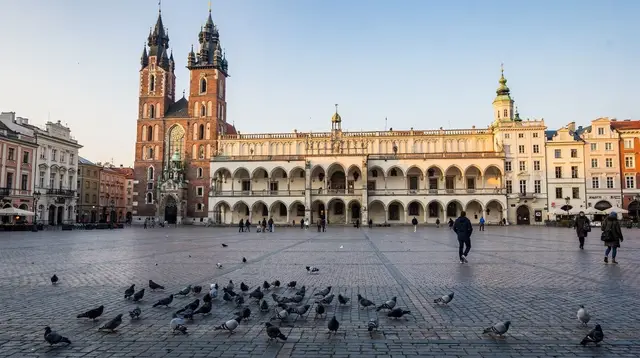
Kraków is roughly 110 km from Zakopane by road — a two-hour bus ride, a bit more by train, and the airport most visitors fly into. It matters for this page in exactly one way: it tells you where the trip starts and ends, and it rules out anything that treats Kraków as a cycling destination from Zakopane. That distance is bus-and-train territory, not e-bike territory, even with a strong battery. If you’re arriving from Kraków, the practical move is to get to Zakopane first — by bus, train, or car — and start the e-bike day from there or from one of the Podhale villages, not from the airport or the old town.
Where Kraków does belong on this page is as a frame of reference: it’s the reason Zakopane has the transport infrastructure it does, and it’s useful for planning the rest of a trip around a single e-bike day rather than confusing the two.
Getting to a start point: the minibus option
Zakopane doesn’t really work as a rental-and-ride-straight-from-your-hotel town, because the interesting valleys and villages sit several kilometres out, along a road that isn’t built for cycling comfort. The private minibuses that leave from the bus station area and from Kościuszki street solve that: they run out to the trailheads (Kuźnice, Kiry, Siwa Polana, Palenica Białczańska, Wierch Poroniec) and to the thermal baths, and they’re worth treating as part of an e-bike day rather than a separate errand — see the minibus guide for how the network works.
The practical use case: take a minibus out to a valley entrance or a village with your e-bike, then ride from there — either a there-and-back to a thermal bath and a minibus home, or a ride out and a bus back once you’re tired and don’t want the battery-anxious return leg. Whether a given van has room for a bike depends on the vehicle and how busy the day is, so this is a “check when you book” detail, not a guarantee. No rental car is really needed for this kind of day; the Zakopianka road and parking situation is one more reason to lean on the minibuses instead.
Realistic objectives: the Podhale thermal baths
The single clearest way to give an e-bike day a shape is to pick a thermal bath as the finish line. It gives the ride a destination that isn’t a summit, it rewards the effort with something concrete, and it matches what these valleys are actually built around: villages, not wilderness. Four objectives cover the realistic range around Zakopane.
| Objective village | What’s there | Why it works as a finish |
|---|---|---|
| Chochołów | Termy Chochołowskie, the largest thermal bath complex in Poland, about 30 pools | Sits at the edge of the Chochołowska valley, whose flat paved floor is one of the few valley tracks open to bikes |
| Białka Tatrzańska | Terma Bania, water drawn from about 2,500 m deep | A Podhale village with its own ski and leisure infrastructure, easy to combine with a ride through the surrounding countryside |
| Bukowina Tatrzańska | Terma Bukovina, around 20 pools | Sits higher in the Podhale, with wider views back toward the Tatra ridge |
| Szaflary | Gorący Potok and Termy Szaflary | The closest of the four to Zakopane, useful for a shorter day |
Each of these has its own detail worth reading before you commit a day to it: the thermal baths compared guide sets the four against each other, and the Termy Chochołowskie and Terma Bania vs Bukovina pages go deeper on the two most-asked-about pairs.
None of these pages will give you a fixed riding time between Zakopane and the village in question — that number depends on the route taken, the rider, and how much of it is covered by minibus versus pedal, which is exactly why this page treats the villages as destinations to be reached by whatever combination of riding and transfer suits the day, not as points on a printed loop.
Evening sessions at any of the four are generally cheaper and quieter than a midday visit, which also happens to suit an e-bike day: ride in the cooler part of the afternoon, arrive as the crowds are thinning, and let the pools do the recovery work a long ride asks for.
Where riding is actually allowed
This is the detail that trips people up more than distance or weather. Tatra National Park restricts almost everything inside its 211.6 km² to marked walking trails — no bikes, no exceptions — with two notable openings: the paved floor of the Kościeliska valley and the Chochołowska valley both carry a track wide and flat enough that cycling is part of how people move through them, alongside the small road trains and walkers. An entry ticket is still required to be inside the park at all, the same ticket a walker would buy, and it doesn’t change because you’re on two wheels instead of on foot.
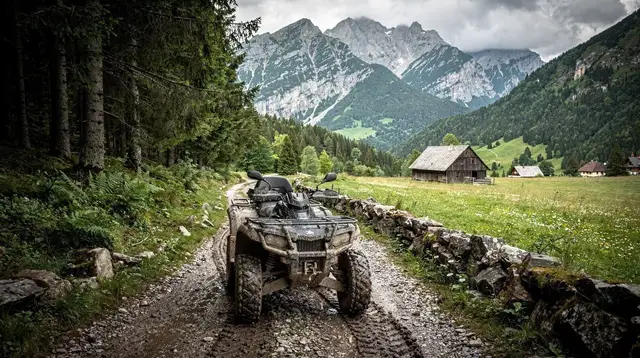
Outside the park boundary, in the Podhale villages and the foothill backroads between them, riding is unrestricted in the way any countryside road is — this is where a guided e-mountain-bike outing or a self-planned village-to-village ride actually happens, and where an operator’s specific route knowledge earns its price. For anyone who wants more technical terrain than a valley floor offers, a guided outfit that knows the current state of the foothill trails is the sensible route in:
a guided e-mountain-bike outing covering enduro and cross-country terrain around ZakopaneFor a day built specifically around the Chochołowska valley and a thermal finish, a tour that includes the transfer removes the minibus-logistics question entirely:
a Chochołowska valley e-bike outing that includes the transfer outAnd where the point of the day is really the thermal bath, with the ride as the way of getting there and back, a combined e-bike-and-spa format exists too:
an e-bike tour through the Tatra foothills that ends at a thermal spaSeason: June to September, with a caveat
The riding window here follows the same calendar as hiking, for the same reasons: snow lingers above 1,500 m into May and even June some years, and the first snow can close things down again by November. Between those two ends, June through September is when the valleys, the foothill roads, and the thermal baths are all reliably open and reachable.
Within that window, July and August are the warmest and busiest months, but they’re also when afternoon thunderstorms build over the Tatras with real regularity — the pattern to plan around is an early start and being off any exposed stretch, or at least clear of the ridge-adjacent sections, before early afternoon. This isn’t a Tatras-specific superstition; it’s the same summer storm pattern that shapes hiking plans across the whole national park, and it applies just as much to a ride through open Podhale countryside as to a mountain trail.
September to mid-October is usually the calmer stretch: fewer storms, cooler air that makes the climbing easier on both legs and battery, and — toward the back half of the window — the larches turning gold across the foothills, which the autumn guide covers in more detail. It’s arguably the better month for an e-bike day specifically, since heat and crowds both ease off while the valley tracks and the thermal baths stay fully open.
What this page deliberately leaves out
Three things, on purpose. First, no fixed route or bike-path map: the network of what’s rideable outside the park changes with trail maintenance and local conditions, and a printed route here would go stale faster than it would stay useful — a rental shop or a guided tour in Zakopane will have the current picture. Second, no rental prices: they move by season and by shop, and a number fixed in September 2026 would already be wrong by winter.
Third, no stated loop duration: “how long” depends on which villages you’re linking, how much of the day is minibus versus pedal, how much battery range the bike you’re on actually has, and how long you linger at the thermal bath at the end — variables specific enough that a single quoted duration would mislead more than it would help.
What you can plan around instead: the season (June to September, with September onward the calmer half), the destinations (one of the four Podhale thermal villages), the legal boundary (park trails are for walking, the Kościeliska and Chochołowska valley floors are the exception), and the transport backbone (the minibuses from the station area and Kościuszki street, for either leg of the day).
Guided or self-organised
Both approaches work here, and which one suits depends on how much you want to think about logistics versus terrain. A guided outing — whether the enduro-and-cross-country format, the Chochołowska valley-and-transfer package, or the ride-to-spa combination — hands you a rider who already knows which foothill tracks are open this month and removes the minibus-timing question entirely, since the transfer is built in. Organising it yourself means renting from a shop in town, confirming which valleys currently allow bikes, and building your own combination of riding and minibus legs — more flexible, but it puts the route-permission question on you rather than on someone who checks it daily.
Either way, the złoty is the currency to have on hand: Poland isn’t in the eurozone, and while cards cover most rental shops and thermal bath ticket counters, cash still matters at some hut cafés and market stalls along the way, a detail the budget guide covers if money logistics for the wider trip need sorting out too.
Mistakes worth avoiding
The most common one is assuming a Tatra hiking trail is fair game because it looks quiet and flat near the entrance — it isn’t, and the paved Kościeliska and Chochołowska tracks are the exception, not the rule, inside the park. The second is treating Kraków as a possible endpoint or a day-trip-by-bike from Zakopane; at roughly 110 km it belongs to the bus and the train, not the saddle.
The third is starting a July or August ride in the early afternoon and getting caught by a storm building over the ridge — morning starts aren’t a suggestion in this weather pattern, they’re the difference between a good day and a bad one. And the fourth is booking an e-bike day without asking about bike space on the minibus in advance, since it isn’t guaranteed on every run.
E-bike days around Zakopane, common questions
The questions below cover the logistics that come up most often when people try to turn an e-bike rental into an actual day plan around Zakopane and the Podhale.
Can I ride an e-bike from Zakopane to Kraków?
No. Kraków is about 110 km away by road, and the only realistic ways to cover that distance are the bus, the train, or a car. An e-bike day works inside the Podhale and the foothills, not on the Kraków road.
Can I take an e-bike on the minibuses that leave from Zakopane?
Private minibuses run from the bus station area and Kościuszki street toward the trailheads and the thermal baths, and they are a practical way to reach a start point or come back once you are tired. Space for a bike depends on the vehicle and the driver, so this is worth asking about directly rather than assuming.
Which thermal baths work best as the finish point of an e-bike day?
Termy Chochołowskie in Chochołów, the largest thermal complex in Poland, sits close to the Chochołowska valley. Terma Bania in Białka Tatrzańska, Terma Bukovina in Bukowina Tatrzańska, and Gorący Potok and Termy Szaflary in Szaflary are the other three realistic objectives, each attached to a village rather than a wild trailhead.
Is it allowed to ride an e-bike inside Tatra National Park?
Only on the paved valley-floor tracks that are open to bikes, such as the Kościeliska and Chochołowska valleys, and an entry ticket is still required. The marked hiking trails, including anything leading toward the peaks, are for walkers only.
When is the best time of year for an e-bike day near Zakopane?
June to September, once the high trails have reopened and before the first snow. July and August bring the most reliable riding weather but also frequent afternoon thunderstorms, so mornings are safer. September to mid-October is usually the most stable stretch, with cooler air and golden larches.
Do I need euros or złoty for an e-bike day trip?
Złoty. Poland is not in the eurozone, and while cards work in most places, thermal bath cafés, market stalls, and some mountain huts still prefer or require cash.
Should I book a guided e-bike tour or organise the day myself?
Both exist around Zakopane. A guided outing removes the guesswork about where riding is allowed and pairs well with a thermal bath finish, while organising it yourself means renting locally and checking route permissions valley by valley. Neither this page nor the operators list fixed loop distances or rental prices, because both change too often to print reliably.
Cycling and e-bike tours
Verified deep-linked GetYourGuide tours. Book through these links and we earn a small commission at no cost to you.
GetYourGuide does not provide a product photo for this activity — the image shows the meeting point, photographed by us.