Where to Eat in Zakopane Without Falling for the Tourist Traps
Where can you eat well in Zakopane without overpaying on Krupówki?
Krupówki, the town's single pedestrian street, concentrates the highest prices and the least reliable quality, including cheese sold as oscypek in winter when the real thing stopped being made months earlier. Look for menus with visible prices, dishes drawn from the actual Podhale repertoire such as kwaśnica or moskole, and side streets a few minutes off the crowd.
The problem is geography, not appetite
Almost everyone who visits Zakopane eats their first meal, and often most of their meals, on Krupówki. It is the town’s only pedestrian street, about 1.1 kilometres long, and it is where the wooden villas give way to a solid wall of restaurant terraces, souvenir stalls, and grill stands selling smoked cheese with cranberry sauce.
That concentration is not an accident: Krupówki is where the foot traffic is, so it is also where the highest rents, the highest prices, and the least accountable kitchens cluster together. A restaurant that depends on a single pass of a tourist who will never come back has a different incentive than one that depends on the same Zakopane family eating there every month.
None of this means the food on Krupówki is uniformly bad, and it does not mean you should avoid the street altogether — it is still the town’s centre, and a fair number of decent places sit on it or just off it. What it means is that location on Krupówki tells you almost nothing about quality, and price on Krupówki tells you even less, because the same dish can cost noticeably more there than a few streets away for no difference in what lands on the plate. The goal of this guide is not a list of addresses — those change, and a ranking would be out of date within a season — but a set of criteria you can apply yourself, on any street, to any menu, in Zakopane or in the Podhale villages around it.
The oscypek problem, in one paragraph
The clearest example of what goes wrong on a tourist street is the grilled cheese sold as oscypek. Real oscypek is a smoked sheep’s-milk cheese with Protected Designation of Origin status since 2008, made from at least 60 percent sheep’s milk, and — this is the part that matters here — made only between May and September, when the flocks are up on mountain pasture.
A square of grilled cheese with cranberry sauce bought from a Krupówki stand in December or January cannot be oscypek, because none was made that month. What is actually being sold is almost always gołka, a similar-looking, similar-tasting cow’s-milk cheese produced year-round, priced and marketed as if it were the real, seasonal, protected product. Read more on this in the oscypek guide and the related blog post on winter oscypek.
This is not a small technicality. It is the single most common way a first-time visitor to Zakopane gets misled about food, precisely because the substitute looks and tastes close enough that nobody complains. If you are visiting outside the May-to-September window, treat any grilled cheese on a stick as gołka, priced as a snack, not as the seasonal specialty it is dressed up to be. If you are visiting during the season and want the real thing, ask directly, and expect a seller who actually makes or sources genuine oscypek to answer without hesitation — a vague or evasive answer is itself informative.
Reading a menu like someone who lives here
Three habits do most of the work, and none of them require speaking Polish.
Prices should be on the menu, visibly, before you order. A restaurant that prints prices next to every dish, in the local currency, is telling you it has nothing to negotiate and nothing to hide. A stand or a menu board without visible prices, or with prices only in a foreign currency, is a signal to walk on — this is a pattern seen at tourist-facing food stalls in most European countries, and Zakopane is no exception.
A menu translated into eight or ten languages, with no mention of where anything comes from, is written for turnover, not for repeat local customers. That alone does not make the food bad, but it does mean the kitchen is optimising for a crowd that will never come back to complain. A place that names its cheese supplier, or specifies that its oscypek is seasonal, or lists a specific Podhale village as the source of its trout, is making a claim it can be held to.
Look for the actual Podhale repertoire, not a standardised version of it. Kwaśnica, żurek, moskole, bundz, and bryndza are regional dishes with a real preparation behind them; a kitchen that lists them on a menu clearly meant for large tour groups, alongside pizza and a generic “Polish platter,” is usually simplifying all of them at once. A smaller menu that does fewer things, and does them in the regional style, is a better sign than a long menu that tries to please everyone.
The dishes worth ordering
| Dish | What it is | What to look for |
|---|---|---|
| Kwaśnica | Sour cabbage soup with smoked meat, a Podhale staple | Should taste distinctly sour from fermented cabbage, not just salty; smoked meat visible, not a garnish afterthought |
| Żurek | Rye-soured soup, often with egg and sausage | A cloudy, tangy broth, served in a bread bowl or a regular one — the bread bowl is presentation, not a sign of quality either way |
| Moskole | Grilled potato flatbreads, often with lard, cheese, or garlic | Simple enough that a kitchen either bothers to make them fresh or skips them; a stale, reheated moskol is an easy tell |
| Bundz and bryndza | Fresh and salted sheep cheese, spreadable, sharp | Sold in villages and at markets as much as in restaurants; a sign the kitchen sources regionally rather than from a generic supplier |
| Oscypek (May-Sept only) | PDO smoked sheep cheese, grilled with cranberry sauce | Only genuine in season; ask where and when it was made if it matters to you |
| Grilled trout | Common on menus near streams and thermal areas | Freshness matters more than preparation; a menu offering it everywhere, all year, is worth a second look |
None of these are exotic or hard to find. The point is not to hunt down a rare regional secret, it is to prefer a kitchen that is still cooking the region’s own food over one that has replaced it with a version calibrated for a bus group with twenty minutes to eat.
Cash, cards, and where they actually matter
Poland uses the złoty, and Zakopane runs almost entirely on cards: restaurants, cafés, and most mountain huts all take them without issue. The exceptions are specific and worth remembering rather than generalising from: market stalls, especially at Nowy Targ’s Thursday market, street food stands on and off Krupówki, and some smaller village inns still prefer or require cash.
Carrying a modest amount of złoty covers exactly these situations without needing to plan around them. For the wider picture of what things cost and how the currency works, see the budget guide and the blog post on what the złoty changes for your trip.
Tipping follows ordinary Central European practice: around 10 percent in a sit-down restaurant, rounding up for a coffee or a quick meal. Handing over cash and saying “dziękuję” while walking away is the local shorthand for “keep the change” — useful to know so you are not left standing awkwardly waiting for coins you were not meant to get back.
Away from Krupówki: where the pressure is lower
The most reliable single move is distance. A restaurant a few streets back from Krupówki, in the quieter parts of town, or in one of the Podhale villages such as Kościelisko, Poronin, or Szaflary, answers to a different customer base — locals who eat there regularly and will simply stop coming if the quality slips or the price climbs. That does not guarantee a better meal every time, but it removes the specific pressure that a single crowded tourist street puts on a kitchen: the incentive to prioritise turnover over repeat business.
The same logic applies to the evening highlander feasts sold across town, with live music and a bonfire — read the guide to górale culture and the piece on highlander evening fire and music before booking one, since the format varies a lot between a genuine small gathering and a large, standardised show built for coach groups. Neither is wrong to choose, but knowing which one you are booking avoids disappointment either way.
When a guided tasting is the simpler option
If you are in Zakopane for a short visit and would rather not spend part of it testing menus by trial and error, a guided food or drink experience does the filtering for you. A private tour built around Polish food traditions covers the regional dishes directly with someone who already knows the difference between a seasonal product and its year-round substitute — worth considering if you want the eating itself to be simple: a private food tasting tour built around Polish traditions.
For a different angle on the same idea, a private beer tasting introduces Polish styles and breweries in a small-group setting rather than at a random bar table: a private Polish beer tasting session.
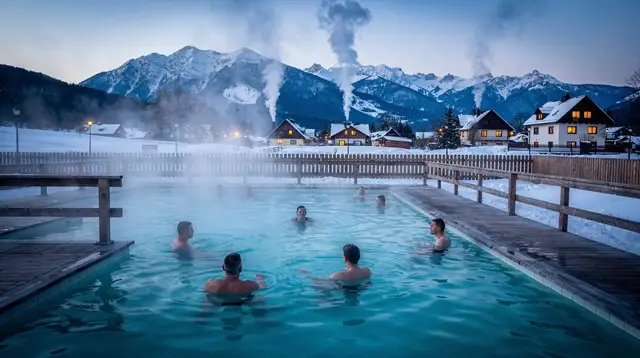
And for visitors coming up from Kraków for the day, a combined outing that pairs the cable car with a tasting stop and the thermal baths bundles transport and food into one planned day rather than several separate decisions: a day trip from Kraków combining the cable car, a tasting, and the hot springs. None of these replace learning to read a menu yourself, but they are a reasonable way to eat well on a first, short visit without doing the homework in this guide in real time, table by table.
A short checklist before you sit down
- Prices printed and visible, in złoty, before you order.
- A menu that names where a product comes from, at least for signature items like cheese or trout.
- Podhale dishes present in something like their traditional form, not folded into a generic “Polish platter.”
- Oscypek only trusted as genuine between May and September; treat anything grilled and sold as oscypek outside that window as gołka.
- A few minutes’ walk off Krupówki usually buys a calmer room and a fairer price for the same style of food.
- Cash kept on hand for markets and street stalls, cards used everywhere else.
None of this requires local knowledge you don’t already have after reading it once. The tourist trap in Zakopane is not exotic — it is the ordinary mismatch between what a street built for a passing crowd sells and what a kitchen cooking for its own neighbours makes. Once you know to look for visible prices, named origins, and the actual regional dishes, the difference between the two is easy to spot on sight, on Krupówki or anywhere else in town.
For the wider pattern of things worth double-checking before you commit to them in Zakopane, see the guide to common mistakes and tourist traps, and for a short first visit that fits eating well around everything else, the two-day weekend itinerary or the wider things to do listings are a reasonable starting point. A private, chauffeured day out is also an option if you would rather have someone else handle logistics while you focus on where to eat: a private Zakopane day out with a chauffeur.
Frequently asked questions about eating well in Zakopane
Is all the food on Krupówki bad?
No, but the street’s density works against the visitor. One kilometre of pedestrian frontage holds most of the town’s visible stalls and restaurants, so it also holds most of the inflated prices and the weakest kitchens, alongside a few solid places that simply get lost in the crowd. Judging by location alone is the mistake, not eating on Krupówki itself.
How do I know if oscypek is real?
Authentic oscypek is a PDO-protected smoked sheep cheese made only from May to September, from at least 60 percent sheep’s milk. A grilled cheese square sold from a street stall in December or January is almost always gołka, a similar-looking cow’s-milk cheese made year-round, not oscypek.
Can I pay by card everywhere in Zakopane?
Cards are accepted in nearly every restaurant, café, and most mountain huts. The exceptions are market stalls, street food stands, and some smaller village inns, which often want cash, so it is worth carrying some złoty for exactly those situations.
What Podhale dishes should I actually try?
Kwaśnica, a sour cabbage soup with smoked meat, and żurek, a rye-soured soup, are regional staples worth ordering wherever they appear on a menu. Moskole, grilled potato flatbreads, and bryndza, a salted sheep cheese spread, are simpler dishes that a kitchen either makes properly or does not bother with at all.
Are the grilled cheese stands on the street safe to eat?
Safe, yes, in the ordinary food-hygiene sense. The issue is not safety but honesty: what is sold as oscypek outside the May-to-September season is a different, cheaper cheese, and the cranberry sauce and price on top of it are calibrated for a passing crowd, not for repeat local customers.
Is it cheaper to eat away from the town centre?
Generally, yes. A kitchen that depends on foot traffic from a single crowded street prices for that traffic; a few streets back, or in a village like Kościelisko or Poronin, the same style of cooking usually costs less simply because the rent and the customer base are different.
Do restaurants in Zakopane accept tips?
Tipping around 10 percent is normal in sit-down restaurants, and rounding up is fine elsewhere. Handing over cash and saying dziękuję while walking away is understood as leaving the change as a tip.
Is a food tour worth it in Zakopane?
A guided tasting removes the guesswork on a short visit: someone who already knows the difference between real and off-season products picks the stops and explains what you are eating. It is a reasonable shortcut for a first visit, less necessary if you already know what to look for and have more than a day or two in town.
Popular day trips
Verified deep-linked GetYourGuide tours. Book through these links and we earn a small commission at no cost to you.
GetYourGuide does not provide a product photo for this activity — the image shows the meeting point, photographed by us.