Quad and Buggy Tours in the Podhale Valleys
Can you ride a quad or buggy into the Tatra Mountains near Zakopane?
No. Tatra National Park (211.6 km², created in 1954) restricts every trail to marked foot paths and bans motorised vehicles, dogs and drones outright. Quad and buggy tours instead run through the Podhale valleys and farm tracks around Zakopane, outside the park boundary.
Where a quad can actually go around Zakopane
The first question anyone searching for a quad or buggy tour near Zakopane should ask is not which company to book, but where the vehicle is even allowed to go. The answer draws a hard line, and it is worth understanding before you look at anything else.
Tatra National Park (Tatrzański Park Narodowy, TPN) covers 211.6 km² of the mountains south of the town and was formally created in 1954. Every trail inside the park is marked, ticketed, and restricted to foot traffic. The park rules are explicit and apply everywhere within the boundary, not just at famous spots: no dogs (with two narrow exceptions in the Chochołowska valley and on the Droga pod Reglami path), no drones, no wild camping, and no motorised vehicles of any kind.
There is no version of a quad or buggy tour that legally rides up toward Morskie Oko, along the ridge to Giewont, or into the Kościeliska or Chochołowska valleys once you’re past the point where the park boundary begins. If a listing implies otherwise, read it again — it almost certainly means the road up to the entrance, not the trail beyond it.
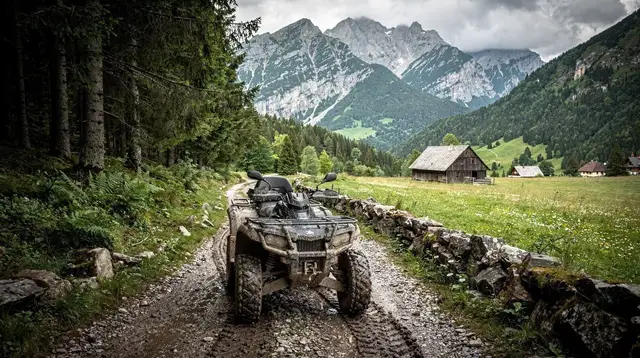
What this leaves is the Podhale itself: the belt of villages, farmland, forest tracks and river valleys spreading out from Zakopane at 830 to roughly 1,000 metres, well below the park. This is genuinely large terrain — gentle hills, working farm roads, patches of forest, river crossings, views back toward the Tatra skyline without ever entering it — and it is where every quad or buggy route in this region actually operates.
Villages like Poronin and Murzasichle, Szaflary, Kościelisko and the wider valley floor around Chochołów sit in exactly this belt, which is why quad routes tend to loop through or near them rather than toward the peaks.
None of this is a technicality to shrug off. Poland’s national parks are actively patrolled, and a vehicle straying off an authorised track is a real infraction, not a grey area. A reputable operator plans a route that never approaches the TPN boundary in a way that invites confusion; that constraint is the honest starting point for this whole activity, not a footnote.
What the terrain is actually like
Podhale is rolling upland rather than high mountain. Expect unpaved farm tracks, forest roads, open meadow edges, and river-adjacent flats, with the Tatra wall visible in the distance for much of a route rather than underfoot. Surfaces vary with the season and with recent rain: packed earth and gravel dry out to a firm, fast base in settled weather, and turn soft, rutted and occasionally slippery when wet. Because these are farm and forestry tracks rather than paved roads, conditions on the day genuinely shape what a route feels like — this is normal for the region and not a sign anything has gone wrong with a booking.
The area sits close enough to town that transfers from central Zakopane or from nearby villages are short by regional standards, and close enough to Kraków that day-trip framing from the city is common — though anyone coming from Kraków should budget for the road itself; see the comparison of getting from Kraków to Zakopane for how that leg usually goes, especially on a Zakopianka weekend.
Season by season: when the ground actually cooperates
Podhale’s tracks are exposed dirt and gravel, so the calendar affects a quad or buggy tour more directly than it affects a paved-road transfer. Here is how the year tends to break down for wheeled off-road riding specifically, as distinct from snow-based activities like sledding or snowmobiling.
| Period | Ground conditions | Fit for a quad/buggy tour |
|---|---|---|
| December–March | Snow-covered, often frozen or compacted | Poor for wheels; this is snowmobile and sleigh-ride season instead |
| April | Thaw under way, tracks often soft and muddy | Weak — one of the least reliable months |
| May–June | Drying out, occasional lingering wet patches | Improving, variable by rainfall |
| July–August | Warm, generally dry ground, but frequent afternoon storms | Workable if you start early and watch the sky |
| September–mid-October | Settled, drier weather, cooler air | Best balance of the year |
| Late October–November | Cooling fast, first snow possible at altitude | Declining, weather-dependent |
The pattern to take away: winter belongs to snow vehicles, not wheeled ones, and the shoulder season from roughly early September to mid-October tends to give the steadiest underfoot conditions without the storm risk that shapes July and August afternoons. For a longer look at how the year unfolds more broadly, the month-by-month weather guide and the dedicated autumn and summer thunderstorm guides fill in the detail behind this table.
Winter (December to March)
Snow generally covers the Podhale valleys through this stretch, and the ground underneath is frozen or compacted rather than the loose earth a quad grips well. This is squarely snowmobile and sleigh-ride territory around Zakopane instead — those activities are built for snow, and a wheeled quad tour is not the natural match for this season. If winter is your window, the winter season guide covers what actually runs well then.
April: the month to plan around, not toward
April is thaw season. Snow that has sat on the valley floor since autumn starts melting, and the tracks a quad or buggy would use turn soft, rutted and often genuinely muddy as a result — the same thaw that produces the famous Chochołowska valley crocus bloom also softens the ground everywhere around it. This is a month to treat with caution rather than to plan a quad tour specifically toward; conditions can shift week to week depending on how fast the melt goes.
Summer (June to September): workable, with a clock on it
By June the ground is usually drying out, and July and August bring warm, often dry conditions across most of a day. The catch is the same one that shapes hiking plans in the Tatras above: afternoon thunderstorms are frequent in July and August specifically. An early start and an eye on the sky matter here too, even though a quad tour never climbs toward exposed ridgeline the way a hike to Giewont does — storms still bring heavy rain, reduced visibility and slick tracks at lower altitude, and route timing that gets you back before the weather turns is simply sensible planning.
September to mid-October: the steadiest stretch
This is generally the best-balanced period for ground conditions specifically: the wet unpredictability of spring has passed, the storm pattern of high summer has eased, and the ground has had a full dry season to firm up. Days are shorter than in July, but the trade-off tends to favour more consistent underfoot conditions across a route.
What this page is not promising
It is worth being direct about what belongs here and what does not. This guide will not name a specific operator, quote a price, or promise a route length, because none of that is fixed enough to state as fact — it varies by which tour you book and changes over a season. It will also never suggest that a quad or buggy route enters Tatra National Park, climbs toward a marked hiking trail, or replaces a walk to a park landmark.
If you are drawn to this region for hiking specifically, that is a separate trip with its own ticketing rules, covered in the guide to booking Morskie Oko and Kasprowy Wierch tickets and the Tatra safety guide — not this one.
What this page does establish is the geography and the calendar: quad and buggy tours belong to the Podhale valleys around Zakopane, not to the national park above them, and the ground itself works best from roughly September into mid-October, is workable but storm-prone in high summer, and is at its weakest in the thaw of April and through the snow-bound winter months.
Currency and practical basics
Poland uses the złoty (PLN), not the euro — worth noting if you are planning a quad tour as part of a longer trip that also dips into the Slovak Tatras, where the currency switches. Cards are widely accepted in and around Zakopane, but smaller rural operator bases in the Podhale valleys can still prefer cash, so it is sensible to carry some złoty rather than assume a card machine will be on hand. For a broader sense of what things cost in the region, the budget and złoty guide is the reference point.
a guided quad ride through the valleys around Zakopane is one way to see this terrain without needing your own vehicle or local route knowledge. For a longer outing that pairs the ride with a stop for food, some tours are built as a quad excursion with a bonfire stop and transfers included, and travellers coming from further afield sometimes prefer a combined day that adds thermal baths to the quad and bonfire format.
Choosing between a quad, a buggy or a snowmobile
Because these three vehicle types get marketed together so often, it helps to separate them by what actually determines the choice: the season and the ground, not personal preference alone. A quad is a straddled, motorbike-style vehicle for one or two riders. A buggy is an enclosed, side-by-side seated vehicle, generally easier for a passenger who prefers not to grip a bike-style seat.
A snowmobile needs snow cover to function at all, which places it firmly in the December-to-March window described above. If you are weighing the three against each other for a specific trip date, that seasonal constraint usually settles the choice before vehicle preference does — see how snowmobile tours frame their own season for the winter side of that comparison.
How a quad tour fits into a longer Zakopane trip
A quad or buggy outing in the Podhale valleys tends to sit well alongside activities that share the same low-altitude, out-of-park footprint: an e-bike route through the same valleys, an evening at thermal baths in Chochołów or Białka Tatrzańska, or a walk through Krupówki back in town.
Because the national park itself is a separate and ticketed undertaking — see the notes on common Zakopane mistakes to avoid for how visitors sometimes conflate the two — treating a quad tour as a Podhale-valley activity rather than a mountain one keeps expectations accurate from the start. Where you base yourself also matters for how easy a transfer to the starting point will be; the guide to staying around Zakopane, Kościelisko or Białka Tatrzańska covers that trade-off.
Quad and buggy tours around Zakopane: frequently asked questions
Can a quad or buggy tour enter Tatra National Park?
No. TPN trails are for walkers only, and motorised vehicles are banned across the whole 211.6 km² park. Every quad or buggy route stays in the Podhale valleys around Zakopane, below the park boundary.
What is the best season for a quad tour around Zakopane?
September to mid-October usually gives the most stable ground and weather. Summer works but afternoon thunderstorms are common in July and August, so early starts matter. April is often too muddy after snowmelt, and the snowy December-to-March months suit sleighs and snowmobiles better than wheeled quads.
Is winter a good time for a quad tour?
Not really for a wheeled quad. Snow cover from December to March favours snowmobile tours instead; quad and buggy routes need bare or firm ground to be practical.
Do quad tours go on the same tracks as Tatra hiking trails?
No. Hiking trails inside the national park are reserved for walkers under park rules. Quad and buggy routes use farm roads and forest tracks in the Podhale valleys around Zakopane, a separate network outside the park.
What should I pack for a quad tour in the Podhale valleys?
Closed shoes, layers that can get muddy, and something for eye and face protection are standard sense on an open quad or buggy. Cash in złoty is worth carrying, since not every rural operator base takes cards.
Is April a good month for a quad tour?
April is thaw season in the Podhale valleys: tracks that were frozen or snow-packed in March turn soft and muddy as the snow melts, which can limit or slow a route. It is a transitional month rather than a reliable one.
Do I need experience to ride a quad near Zakopane?
Tours in this region are typically built around guided groups following a lead vehicle on shared tracks, which is why this page does not promise a specific format, vehicle type or skill level — that detail sits with whichever tour you book, not with the terrain itself.
Quad and buggy tours
Verified deep-linked GetYourGuide tours. Book through these links and we earn a small commission at no cost to you.
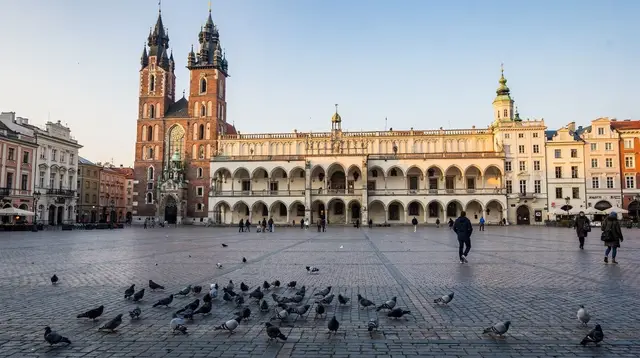
GetYourGuide does not provide a product photo for this activity — the image shows the meeting point, photographed by us.